



Ergonomic Chairs for Kids: 2026 Posture & Growth Guide
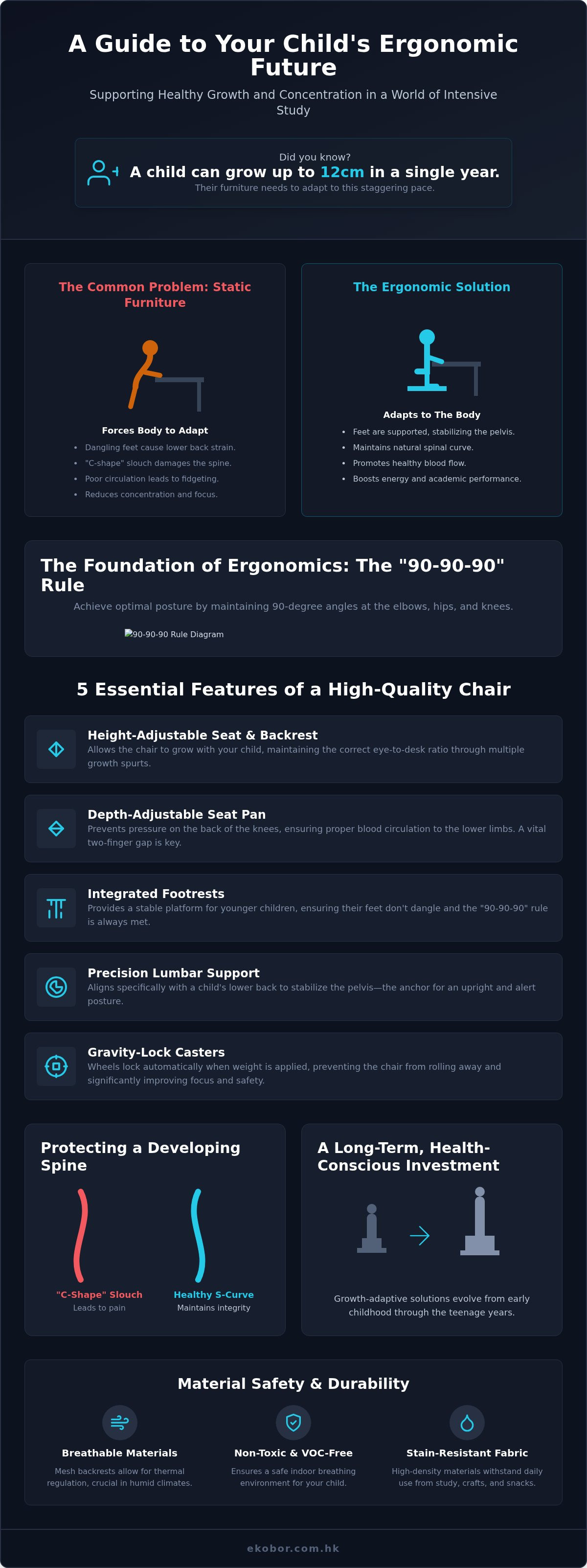
Did you know that a child can grow up to 12 centimeters in a single year? It's a staggering pace that often makes buying furniture feel like a losing race against time. You've likely watched your child hunch over a desk that was "just right" only months ago, or noticed the constant fidgeting that signals physical discomfort during those long Hong Kong study sessions. Finding the perfect ergonomic chair for kids is about more than just a seat; it's about providing a supportive partner for their physical development and holistic wellness.
We understand the worry of seeing a child develop poor posture habits early in life. This 2026 guide will help you navigate the latest design innovations to protect your child's spinal integrity and boost their concentration. You'll learn how to select a chair that offers long-term value by adapting to rapid growth while fitting into compact urban spaces. We'll preview the essential features of "grow-with-me" furniture, the benefits of active sitting, and how to ensure your choice aligns with the updated 2026 Hong Kong safety standards for total peace of mind.
Key Takeaways
- Understand the "90-90-90" rule to protect your child's natural spinal curve and prevent postural fatigue during intense Hong Kong study sessions.
- Identify why a high-quality ergonomic chair for kids must feature both height and depth adjustability to support healthy physiological development as they grow.
- Learn the practical steps to calibrate a compact study station, including how to maintain the vital two-finger gap for optimal lower-limb circulation.
- Discover how growth-adaptive solutions like the Jelly and ORCA series provide a long-term, health-conscious investment that evolves from early childhood through the teenage years.
What is a Kids Ergonomic Chair and Why Does it Matter?
An ergonomic chair for kids isn't just a scaled-down version of an office seat. It's a precision-engineered tool designed to support a child's natural spinal curve while accommodating their constant physiological changes. Unlike static furniture, these chairs prioritize the science of ergonomics to ensure that a child's environment adapts to their body, rather than forcing their body to adapt to the furniture. This distinction is vital in a city like Hong Kong, where intensive study hours begin at a young age.
Most children struggle in standard dining or adult office chairs because these pieces ignore the "90-90-90" rule. For optimal health, a child needs 90-degree angles at their elbows, hips, and knees. When feet dangle or the seat pan is too deep, the pelvis tilts, the spine slumps, and the child's focus evaporates. Proper seating also dictates the distance between the eyes and the desk. Maintaining a healthy viewing distance helps prevent early-onset myopia and mitigates the risk of scoliosis by keeping the spine in a neutral, supported position.
The Physiology of a Growing Spine
Between the ages of 5 and 12, the lumbar curve undergoes significant development. A "one-size-fits-all" approach is a myth because a child's bone density and muscular support change almost monthly. A quality ergonomic chair for kids must stabilize the pelvis, which acts as the anchor for an upright and alert posture. Without this stability, the spine is prone to the "C-shape" slouch that leads to chronic back pain and postural deformities later in life.
Academic Performance and Ergonomics
Physical fatigue is a silent thief of concentration. When a child's body is busy trying to find a comfortable position, their brain has less energy for deep work. Many parents mistake "fidgeting" for a lack of discipline, but it's often just a sign of physical strain. Movement-friendly designs allow for subtle shifts in weight, which keeps blood flowing and oxygenates the brain. This reduced fatigue allows for longer periods of cognitive focus during homework. Pediatric ergonomics serves as the essential foundation for lifelong spinal health.
5 Essential Features of a High-Quality Kids Ergonomic Chair
Selecting a high-quality ergonomic chair for kids requires looking beyond basic height adjustments. True ergonomics is about dynamic support that evolves with a child's changing proportions. To ensure a chair provides long-term value and health benefits, it must include these five technical features:
- Height-adjustable seat and backrest: These allow the chair to grow alongside your child, maintaining the correct eye-to-desk ratio throughout multiple growth spurts.
- Depth-adjustable seat pan: This is critical for preventing pressure on the back of the knees, ensuring blood circulates freely to the lower limbs.
- Integrated footrests: For younger children, a footrest ensures the "90-90-90" rule is met even when the chair is at a higher desk.
- Precision lumbar support: The support must align specifically with the child's small of the back, which is much lower than an adult's.
- Gravity-lock casters: These casters lock automatically when weight is applied. This prevents the chair from rolling away during study, which significantly improves focus and safety.
If you want to see how these features function in a real-world setting, you can visit our Hong Kong showroom for a personalized fitting session.
The Importance of Foot Support
Dangling feet are a primary cause of lower back strain and restlessness. When a child's feet don't reach the floor, the weight of their legs pulls on the lumbar spine, leading to discomfort. Models like the Jelly Kids chair solve this with adjustable footrests. These provide a stable platform that anchors the pelvis. As your child grows, these components can be adjusted or removed to transition to floor support, ensuring they always have a solid base for "active sitting."
Material Safety and Durability
Hong Kong's unique humidity levels make material choice a health priority. Breathable mesh backrests are often superior to solid plastics as they allow for better thermal regulation. We recommend choosing non-toxic, VOC-free materials to ensure a safe indoor breathing environment. Since study areas often double as craft or snack zones, look for high-density, stain-resistant fabrics that withstand daily use without losing their supportive structure. Durability isn't just about the frame; it's about the longevity of the cushioning and the integrity of the mechanical adjustments.
How to Set Up the Perfect Study Station in Hong Kong
Setting up an ergonomic chair for kids requires a systematic approach to ensure physical benefits translate into academic focus. In Hong Kong's high-density living environments, where study nooks are often carved out of bedroom corners, precision in setup is non-negotiable. Follow these five steps to calibrate your child's workspace for maximum health and productivity.
- Step 1: Measure for alignment. Start by adjusting the chair height so your child's elbows are level with the desk surface. Their feet should be flat on the floor or a dedicated footrest.
- Step 2: Calibrate seat depth. Adjust the seat pan until there is a two-finger gap between the edge of the seat and the back of your child's knees. This prevents pressure on the popliteal artery.
- Step 3: Align lumbar support. Position the backrest so the lumbar curve fits snugly into the small of your child's back. This provides the necessary anchor for an upright posture.
- Step 4: Sync with the desk. Ensure the chair is positioned close enough to the desk that your child doesn't need to lean forward. Pairing the chair with an I-Baby Kids Height Adjustable Desk allows the entire station to grow in unison.
- Step 5: Test range of motion. Encourage your child to lean back and move side-to-side. A quality setup should facilitate "Active Sitting" without losing spinal support.
Ready to optimize your child's study environment? Explore our full range of ergonomic chairs and discover the difference a professional fitting makes.
Maximizing Small Study Spaces
Hong Kong bedrooms demand clever furniture choices. We recommend choosing an ergonomic chair for kids with a compact star base to avoid tripping hazards in narrow walkways. Armless designs or chairs with stow-away armrests are particularly effective here. These features allow the chair to be tucked fully under the desk when not in use, reclaiming valuable floor space for play and movement. This spatial efficiency doesn't compromise health; it simply adapts professional standards to urban constraints.
Common Posture Mistakes to Avoid
Even the best chair can't fix poor habits without proper adjustment. Watch out for "The Perch," where children sit on the very edge of the seat, completely bypassing the backrest's support. This usually happens when the seat depth is too large. Conversely, "The Slump" occurs when a child slides forward because their feet can't reach the floor, leading to a rounded spine. Finally, prevent "The Lean" by ensuring books or monitors are at eye level. If a child has to tilt their head down, they'll inevitably pull their shoulders forward, negating the chair's ergonomic benefits.
Investing in Growth: EKOBOR’s Curated Ergonomic Solutions
Choosing the right ergonomic chair for kids is an investment that yields dividends in physical health and academic stamina. At EKOBOR, we've curated a selection of Red Dot Award-winning designs specifically for the Hong Kong market. Our range addresses the entire developmental spectrum, from the first day of kindergarten to the final university thesis, ensuring that your child's workspace is always a supportive partner in their growth.
For early learners aged 3 and up, the Jelly Kids Series provides an ideal starting point. Its integrated footrest ensures that even the smallest students can maintain a stable, grounded posture while their feet are still far from the floor. As your child enters the primary school years, the ORCA Series offers a robust and versatile transition. It features advanced adjustability that accommodates rapid growth spurts without sacrificing the precision of its lumbar support, making it a durable choice for high-intensity study environments.
While the right features are essential, the ultimate success of a study station depends on the fit. We invite you to experience our professional consultation services at our Causeway Bay or Kowloon Bay showrooms. Seeing the chairs in person allows you to compare the tactile feel of different materials and ensures the mechanical adjustments align perfectly with your child's current physiological profile.
Active Sitting with the HAG Capisco
For older children and teenagers, the HAG Capisco Puls 8020 represents the pinnacle of movement-based seating. Its unique saddle-seat design encourages a natural, upright posture that opens the hip angle and stabilizes the spine. This design promotes "active sitting," which keeps blood circulating and improves brain oxygenation during intense study sessions. It's a sustainable choice that often serves a student from middle school all the way through their professional career, adapting to various sitting positions including sideways or backwards.
The EKOBOR Difference: Total Wellness
Our commitment to your family's health extends beyond a single piece of furniture. We provide a comprehensive guide to ergonomics to help you foster a culture of wellness throughout your home. Because every child has a unique physiological profile, we believe a professional fitting is essential to avoid the common posture mistakes we've discussed. Our wellness consultants are trained to explain the underlying reasoning behind each design, projecting a standard of care that goes beyond a mere product sale.
Visit our showroom to let your child test the Jelly and ORCA series today! We're here to help you transform their study nook into a powerhouse of focus and long-term spinal health.
Securing Your Child's Future Through Proactive Posture Care
Choosing the right ergonomic chair for kids is a decision that impacts more than just a homework session; it's a commitment to their lifelong physiological health. By prioritizing features like seat depth adjustability and integrated foot support, you provide the stability a developing spine requires during rapid growth spurts. We've seen how "active sitting" designs can transform restlessness into deep focus, allowing your child to excel in Hong Kong's competitive academic environment without compromising their physical well-being.
With over 15 years of ergonomic expertise in Hong Kong, EKOBOR is dedicated to helping families find sustainable wellness solutions. Our curated selection of world-class ergonomic brands ensures that every chair meets the highest standards of safety and durability. We invite you to visit our showrooms in Causeway Bay or Kowloon Bay for hands-on testing and professional guidance. Taking the time to ensure a perfect fit today prevents postural struggles tomorrow. Book an Ergonomic Assessment for Your Child at EKOBOR and let's work together to inspire healthy, vibrant growth in every study nook.
Frequently Asked Questions
At what age should a child start using an ergonomic chair?
Children should ideally transition to a specialized seat around age 3. This is when they begin engaging in more structured activities like drawing or early reading. Starting early prevents the development of compensatory posture habits that are difficult to correct later. Models like the Jelly Kids series are engineered for these early stages. They provide the necessary pelvic stability and foot support to ensure a healthy spinal curve from the very beginning of their academic journey.
Will an ergonomic chair really help my child focus better?
Physical comfort is an essential prerequisite for cognitive endurance. When a child's body is supported by an ergonomic chair for kids, they're less likely to experience the physical fatigue that leads to fidgeting and loss of focus. By maintaining proper blood circulation and oxygen flow through active sitting, these chairs help keep the brain alert. This allows students to dedicate their full mental energy to their studies rather than managing bodily discomfort and postural loading.
How do I know if my child has outgrown their current study chair?
You'll know it's time for an adjustment or upgrade when the 90-90-90 rule can no longer be met. Look for signs like feet dangling, knees extending too far past the seat, or the backrest support hitting the wrong part of the spine. Since children can grow up to 12 centimeters annually, regular assessments are vital. If the seat depth is too shallow to support the thighs comfortably, it's a clear signal they've outgrown their current setup.
Are wheels on a kids chair safe or will they cause distractions?
Wheels are perfectly safe when they feature sit-lock or gravity-lock technology. These specialized casters lock automatically when weight is applied, ensuring the chair remains stationary and stable while your child is working. This prevents the chair from rolling back unexpectedly, which can cause distractions or even falls. These safety mechanisms allow for easy mobility when the chair is empty while providing a rock-solid foundation for concentration during intensive study hours.
Can I use a regular adult office chair for my child?
We strongly advise against using adult chairs for children. Adult models are designed for much larger frames; the seat pan is typically too deep, and the lumbar support is positioned too high. This forces a child to sit on the edge or slouch, which can lead to long-term spinal issues like scoliosis. A dedicated ergonomic chair for kids provides the specific proportions and adjustability required to support their unique physiological development and protect their growing joints.
What is the best way to clean and maintain a kids study chair?
Maintaining a study chair involves regular vacuuming of the mesh or fabric to remove dust. For spills, use a damp cloth with mild, non-toxic soap to prevent staining without introducing harmful chemicals into your child's environment. It's also wise to periodically check the mechanical parts and casters for any trapped hair or debris that might hinder movement. Choosing durable, high-density materials ensures the chair remains supportive and hygienic throughout years of daily use and growth.


