



The Complete Guide to Ergonomic Desks for Kids: Protecting Your Child’s Health in 2026
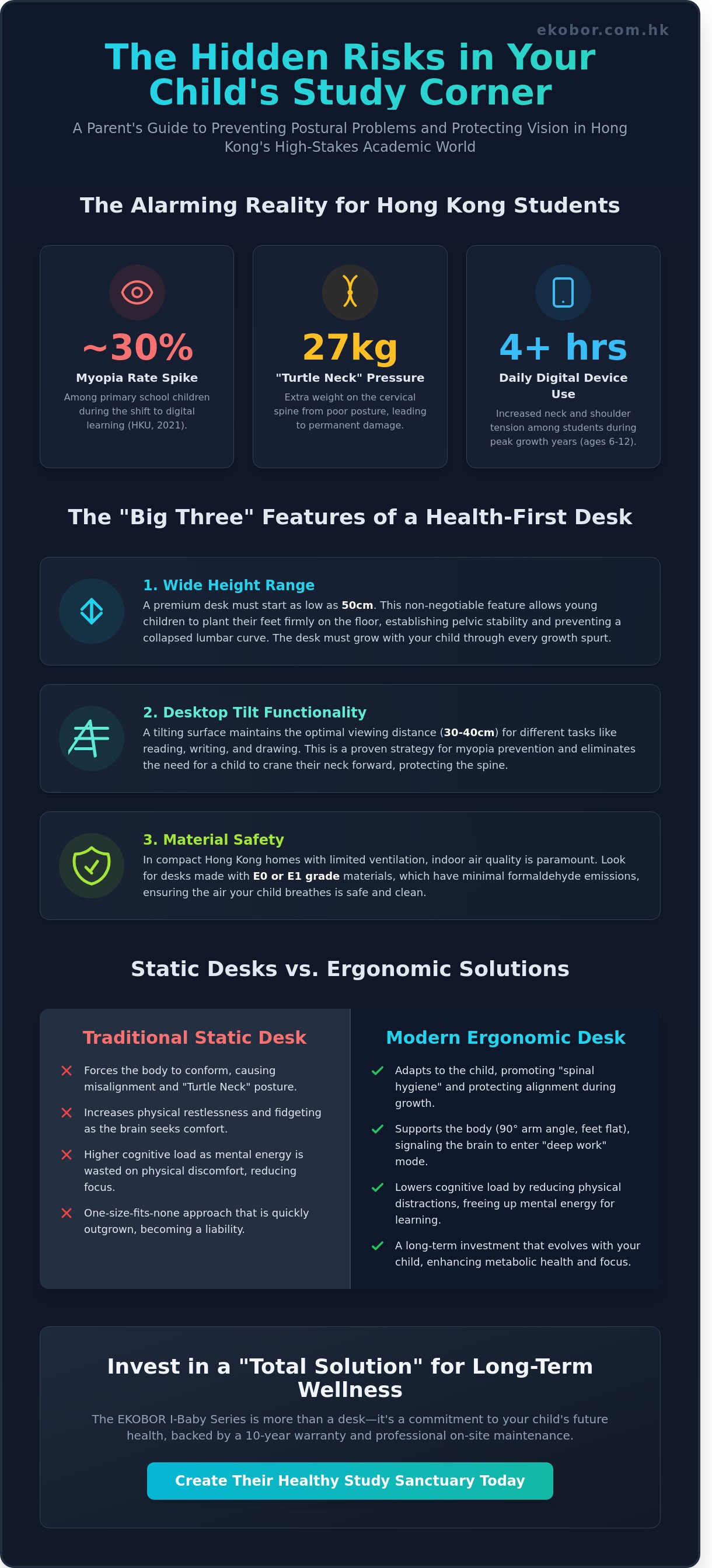
Did you know that research from the University of Hong Kong in 2021 indicated that myopia rates among primary school children reached nearly 30% during the shift to digital learning? This data points to a growing crisis in pediatric musculoskeletal health and visual hygiene. As a parent in Hong Kong, you're likely concerned about how long study hours in compact apartments affect your child's developing spine. It's a valid worry. We understand that finding the right ergonomic desk for kids is often the difference between a lifetime of chronic back pain and a future of healthy vitality.
You want a "Total Solution" that respects your home's square footage while prioritizing your child's physical development. This guide will show you how to transform a small corner into a professional-grade study sanctuary that grows alongside them through 2026 and beyond. We'll explore the science of sit-to-stand culture and how specific mechanical features can enhance concentration and prevent eye strain. You're about to discover the essential steps to creating a space-efficient environment that fosters both academic success and long-term wellness for your family.
Key Takeaways
- Understand how childhood ergonomics prevents the "Turtle Neck" phenomenon and protects your child’s spinal alignment during critical growth spurts.
- Identify the essential "Big Three" features of a premium ergonomic desk for kids, including the necessity of a 50cm minimum height for young beginners.
- Compare traditional static desks with modern sit-to-stand solutions to enhance your child's metabolic health and focus through active movement.
- Learn how to optimize compact Hong Kong study spaces by selecting the ideal desk width to balance performance with limited floor plans.
- Discover why the EKOBOR I-Baby Series serves as a "Total Solution" for long-term wellness, offering a 10-year warranty and professional on-site maintenance.
The Science of Childhood Development: Why Ergonomics Matter Before Adulthood
The science of ergonomics focuses on designing environments that fit the physiological needs of the user, a principle that's critical during a child's developmental years. For children, this means furniture must adapt to rapid growth spurts rather than forcing the body to conform to a static surface. Childhood ergonomics is the study of how furniture design can be optimized to support a child’s changing proportions, ensuring that their physical environment evolves as quickly as they do.
To better understand how these principles apply to a child's learning environment, watch this helpful video:
Fixed-height desks often lead to the "Turtle Neck" phenomenon. When a desk is too low or a monitor isn't at eye level, children crane their necks forward and down. This posture puts up to 27 kilograms of extra pressure on the cervical spine. In Hong Kong, where study hours are among the longest globally, this misalignment can lead to permanent postural changes before a child even reaches secondary school. Proper desk height also influences vision. Maintaining a viewing distance of at least 30 to 40 centimeters is a proven strategy for myopia prevention. Since roughly 40 percent of Hong Kong's primary school students already require vision correction, an ergonomic desk for kids acts as a vital tool in preserving long-term eye health.
Musculoskeletal Health in the Digital Study Age
Hong Kong students now spend over 4 hours daily on digital devices, which has significantly increased neck and shoulder tension. Standard furniture fails during the peak growth years of ages 6 to 12 because a child's height can increase by 6 centimeters in a single year. Practicing "spinal hygiene" means treating posture with the same daily discipline as dental care. This ensures the musculoskeletal system remains aligned during these formative stages, preventing the chronic pain often seen in sedentary adults.
The Psychology of a Dedicated Study Space
A professional-grade environment signals a transition into "deep work" mode for a child's brain. When a child's feet are flat on the floor and their arms are supported at a 90-degree angle, the brain stops sending signals to "fidget" to find comfort. This reduction in physical restlessness lowers the cognitive load, allowing more mental energy for complex problem-solving. Ergonomic furniture doesn't just support the spine; it supports the developing mind's capacity for concentration. Investing in a high-quality ergonomic desk for kids creates a psychological boundary that transforms a small Hong Kong living space into a productive sanctuary.
Core Features of a Premium Kids’ Ergonomic Desk: Beyond Just Height Adjustment
Selecting an ergonomic desk for kids requires looking past surface aesthetics to the mechanical engineering beneath. A truly health-conscious desk focuses on the "Big Three" pillars: a wide height range, desktop tilt functionality, and material safety. In Hong Kong, where children begin formal primary education as early as age six, a desk must accommodate a starting height of 50cm. This specific measurement ensures that younger students can sit with their feet firmly planted on the floor, which is the foundation of pelvic stability and long-term spinal health. Using ergonomic tips from pediatric experts allows parents to understand that without this low starting point, a child's legs will dangle, leading to poor circulation and a collapsed lumbar curve.
Safety extends beyond posture to the very air your child breathes. Because Hong Kong homes often have limited ventilation, indoor air quality is a critical concern. Premium desks utilize E0 or E1 grade materials, which keep formaldehyde emissions below 0.05 mg/m³. This standard protects developing respiratory systems during long study sessions. Additionally, physical safety features like anti-collision sensors and rounded corners are vital. Anti-collision technology detects resistance and stops the motor immediately, preventing pinched fingers or damage to other furniture in compact living spaces.
The Importance of a Tiltable Desktop
Static, flat surfaces force children to crane their necks forward, putting immense pressure on the cervical spine. A tiltable desktop transforms the workstation into a dynamic environment. Different tasks require specific angles to maintain a neutral neck position: 0 to 7 degrees for writing, 15 degrees for reading, and 30 degrees or more for drawing. These adjustments bring the work to the child rather than the child to the work. When choosing a desk, prioritize hydraulic or gas-lift tilting mechanisms. These systems are easy for children to operate independently, encouraging them to take ownership of their physical well-being. It's about creating a "Total Solution" that adapts to every academic or creative need throughout the day.
Durability and 'Growth-Proof' Engineering
Investing in a high-quality ergonomic desk for kids is a commitment to a 10-year lifespan. While cheap alternatives may seem attractive, they often develop a "wobble" at higher elevations that distracts the student and compromises safety. Look for dual-motor systems and heavy-duty steel frames that remain rock-solid even when extended to 100cm or more. A growth-proof desk should also include integrated cable management and storage hooks to keep the workspace organized. This organized environment reduces cognitive load and allows the child to focus entirely on their tasks. You can explore our ergonomic furniture selections to find models that bridge the gap between medical necessity and modern home design, ensuring your child thrives from primary school through their teenage years.
Comparing Study Environments: Static Desks vs. Sit-to-Stand Solutions for Students
Traditional fixed-height desks are becoming relics of an era that didn't fully understand pediatric physiology. These static surfaces force children into a rigid, singular posture for hours, often leading to rounded shoulders and neck strain before they even reach secondary school. In contrast, modern electric height-adjustable solutions allow the workspace to evolve alongside the child's daily needs. By moving away from a "one-size-fits-all" approach, parents can address the unique physical demands of a growing body in 2026.
The 'Sit-to-Stand' Culture in the Classroom and Home
Alternating posture is the most effective way to prevent the "sedentary slump" that typically triggers afternoon fatigue during homework sessions. When a child stands, they experience a 15 to 20 percent increase in blood flow to the brain compared to prolonged sitting, which directly supports cognitive function and memory retention. This movement also activates core muscle groups and leg muscles that remain dormant while sitting. By adopting these principles, families contribute to a "Total Solution" for long-term health. You can explore these broader ergonomic standards in The Ultimate Guide to Choosing a Standing Desk in Hong Kong (2026 Edition). Investing in an ergonomic desk for kids ensures that movement is integrated into their study routine rather than treated as a distraction.
When to Choose a Manual vs. Electric Adjustment
The success of a sit-to-stand routine depends on how easy it's to change positions. Manual adjustment desks often suffer from high "friction," where the physical effort required to turn a crank handle discourages frequent use. In many Hong Kong households, manual desks end up staying at a single height for months because the adjustment process is too cumbersome for a child. Electric dual-motor systems change this dynamic entirely. Our I-Easy dual-motor technology serves as a benchmark, providing transitions that are smooth, quiet, and fast. This allows a student to raise their ergonomic desk for kids in seconds without losing their train of thought or interrupting their focus.
To implement a healthy framework at home, we recommend the following intervals for students to maximize metabolic health:
- The 30/15 Rule: Aim for 30 minutes of sitting for deep focus tasks, followed by 15 minutes of standing for reading or creative work.
- Transition Cues: Use the end of a study chapter or the conclusion of an online lesson as a natural signal to change the desk height.
- Postural Check: Ensure elbows remain at a 90-degree angle and the top of the monitor stays at eye level in both sitting and standing positions.
This rhythmic approach prevents the accumulation of spinal pressure and keeps energy levels consistent throughout the evening, transforming the study environment into a space of vitality.
The Hong Kong Parent's Guide to Optimizing Small Study Spaces
Fitting a high-performance ergonomic desk for kids into a Hong Kong apartment requires a strategic approach to floor management. With the average living space per person in the city sitting at roughly 161 square feet, every centimeter counts. Parents must often choose between an 80cm compact model and a 120cm full-sized version. An 80cm desk is a surgical fit for the tight corners of estates like Whampoa Garden or Taikoo Shing, while a 120cm desk offers a versatile platform that doubles as a hobby station for painting or building models. This multi-functional approach ensures the furniture grows with your child's interests, not just their height.
Professional installation is vital in high-density urban settings. HK apartment walls aren't always perfectly square, and older flooring can have subtle inclines. A certified technician ensures the desk is perfectly level, preventing mechanical wear on height-adjustable components and ensuring the safety of your child during daily use. This precision is what separates a premium wellness solution from standard flat-pack furniture.
Maximizing Vertical Space and Lighting
Small rooms shouldn't limit functionality. You can pair an ergonomic desk for kids with monitor arms or hutch shelves to move clutter off the desktop. This vertical strategy frees up 30% more usable surface area for handwritten tasks. Proper lighting is also a health necessity. Position the desk perpendicular to windows to eliminate screen glare, which a 2024 survey identified as a leading cause of digital eye strain in 65% of local students. Consider active sitting chairs or stools that tuck completely under the desk. These options encourage micro-movements and core engagement without the bulky footprint of traditional office seating.
Professional Assessment and Showroom Visits
Don't rely on online measurements alone. We invite parents to bring their children to our showrooms in Causeway Bay or Kowloon Bay for a personalized fitting. A 10-minute desk test is the most effective way to ensure a perfect match for your child's current physiology. During the visit, our consultants check for three critical alignment markers. First, we ensure there's at least 10cm of knee clearance. Second, the elbow angle must rest naturally at 90 degrees on the desktop. Third, the top of the monitor or book stand should align with the child's eye level to prevent neck craning. To complete your home setup, read our Ergonomic Chair HK: The Definitive 2026 Buyer’s Guide for expert advice on chair pairing.
Investing in Longevity: Why the EKOBOR I-Baby Series is the Total Solution
Choosing an ergonomic desk for kids in Hong Kong requires a perspective that looks far beyond the current school year. The I-Baby series is engineered specifically for the unique, high-pressure journey of a student in this city. It addresses the physical demands of long study hours while fitting seamlessly into the compact living environments typical of local homes. This isn't just a piece of furniture; it's a foundational tool for a child's developmental health.
EKOBOR backs the I-Baby series with a 10-year warranty and dedicated on-site maintenance. This level of support is rare in the furniture industry and reflects a deep confidence in the product's premium build quality. Parents don't have to worry about mechanical failures or wear and tear as their child grows. The aesthetic design is equally intentional. By avoiding overly juvenile colors and shapes, the desk maintains a "grown-up" look that remains stylish from the first day of primary school through the final years of university. It's a one-time investment that prevents the need for multiple replacements as tastes and heights change.
This series represents a vital extension of the EKOBOR "Wellness at Work" philosophy. By applying the same rigorous standards used for corporate professionals to the needs of students, the brand ensures that musculoskeletal health is prioritized early. Transitioning from a sedentary habit to a sit-to-stand culture during formative years can prevent a lifetime of chronic back pain and poor circulation. Using a high-quality ergonomic desk for kids ensures that your child stays focused and comfortable during intense revision sessions.
The EKOBOR Advantage: Beyond the Furniture
The "Total Solution" approach sets EKOBOR apart from standard retailers. By pairing the I-Baby desk with specialized seating like the HAG Capisco Puls, parents create a workspace that encourages active sitting. This setup allows for constant micro-movements that keep the brain engaged and the spine supported. The brand's ISO9001 certification serves as a global benchmark for reliability and manufacturing excellence. "At EKOBOR, we don't just sell desks; we provide the blueprint for a lifetime of healthy posture."
Next Steps for Your Child's Health
Protecting your child's spinal health shouldn't be a guessing game. Parents are encouraged to book a professional ergonomic assessment to ensure their child's study setup is perfectly calibrated to their current physical needs. The transition to a healthier home environment is designed to be effortless. From selecting the right model online to receiving professional home installation, every step is managed by experts. Take the first step toward a more vibrant, healthy study life today.
Invest in Your Child’s Long-Term Physical Vitality
Choosing the right ergonomic desk for kids is a vital decision that shapes your child's musculoskeletal health well into adulthood. By moving away from static study environments and embracing the sit-to-stand culture, you're helping them avoid the long-term risks associated with a sedentary lifestyle. The EKOBOR I-Baby Series provides a Total Solution that maximizes efficiency even in compact Hong Kong homes. It's about creating a workspace that grows alongside them, ensuring perfect spinal alignment at every stage of development.
Our designs meet rigorous ISO9001 Certified Quality standards to give you peace of mind. Every purchase includes a 10-year on-site warranty and professional installation for all Hong Kong orders, so you can focus on what matters most. It's never been easier to prioritize wellness in the home study environment.
Transform your child's study habits with EKOBOR's I-Baby ergonomic collection
Your child deserves a foundation built on health and comfort. Let's make 2026 the year they reach their full potential in a space designed for their success.
Frequently Asked Questions
At what age should a child start using an ergonomic desk?
Children should begin using an ergonomic desk as early as age 3, coinciding with the development of fine motor skills for drawing and reading. By age 5, 90% of a child's brain has developed, making this a critical window to establish healthy postural habits. Starting early prevents the "hunchback" posture often seen in primary students. An adjustable ergonomic desk for kids grows with them, ensuring their feet stay flat on the floor and their spine remains aligned during these formative years.
Is a standing desk suitable for a child with ADHD or focus issues?
Yes, standing desks are highly effective for children with ADHD because they allow for "micro-movements" that help regulate the nervous system. A 2016 study by Texas A&M University showed that students using standing desks were 12% more likely to engage in classroom tasks. This physical outlet reduces restlessness and improves blood flow to the brain. It's a key part of a Total Solution for children who find sitting still for 40 minutes a challenge.
How do I know if the desk is at the correct height for my child?
You'll know the desk is at the correct height when your child's elbows rest comfortably on the surface at a 90 degree angle. Their feet must be flat on the floor with knees bent at 90 degrees to ensure proper musculoskeletal health. If their shoulders are shrugged or their legs are dangling, the desk is misaligned. Use a measuring tape to check that the desk height matches their seated elbow height, typically ranging from 50cm to 80cm as they grow.
What is the difference between E0 and E1 grade materials in kids' furniture?
The primary difference lies in formaldehyde emission levels, with E0 being the safer, premium choice for indoor air quality. E0 grade materials emit less than 0.5mg/L of formaldehyde, while E1 grade allows up to 1.5mg/L. Since children breathe 50% more air per pound of body weight than adults, choosing E0 is vital. Ekobor prioritizes these sustainable materials to protect your child's respiratory health and prevent long term exposure to toxic chemicals in the home study environment.
Can an ergonomic desk really prevent myopia or eye strain?
An ergonomic desk for kids helps prevent myopia by maintaining a consistent 40cm to 50cm viewing distance between the eyes and the study material. Desks with a tilting surface, ideally set at 15 to 20 degrees for reading, reduce the need for the child to lean forward. This posture minimizes ciliary muscle strain. Research indicates that proper lighting and positioning can reduce eye fatigue by 30%, protecting your child's vision during intense study sessions.
How much space do I need in a typical HK apartment for a kids' ergonomic setup?
You can fit a complete ergonomic setup in a footprint as small as 80cm by 60cm, which is ideal for the 400 square foot apartments common in Hong Kong. Many parents opt for 100cm width desks to balance functionality with space constraints. Our designs focus on a Total Solution that maximizes vertical storage. This compact approach ensures your child has a dedicated "Wellness at Work" zone without crowding the living room or bedroom.
Why should I choose an electric standing desk over a manual one for my child?
Electric standing desks are superior because they allow for seamless, one touch transitions that children can manage independently. A manual crank often takes 20 to 30 rotations to change height, which discourages kids from switching between sitting and standing. An electric motor adjusts the height in under 5 seconds with precision accuracy. This encourages a Sit-to-Stand culture at home, ensuring the desk actually gets used in both positions rather than staying stuck at one height.
Does EKOBOR provide installation services for home study desks in Hong Kong?
Yes, EKOBOR provides professional on site installation services across Hong Kong to ensure your furniture is safe and correctly calibrated. Our expert technicians handle the assembly and guide you through the ergonomic settings tailored to your child's current height. We cover all residential areas, from Central to the New Territories. This service removes the stress of DIY assembly and guarantees that the mechanical components of your electric desk function perfectly from day one.


