



Ergonomics in 2026: The Comprehensive Guide to Wellness and Productivity in Hong Kong
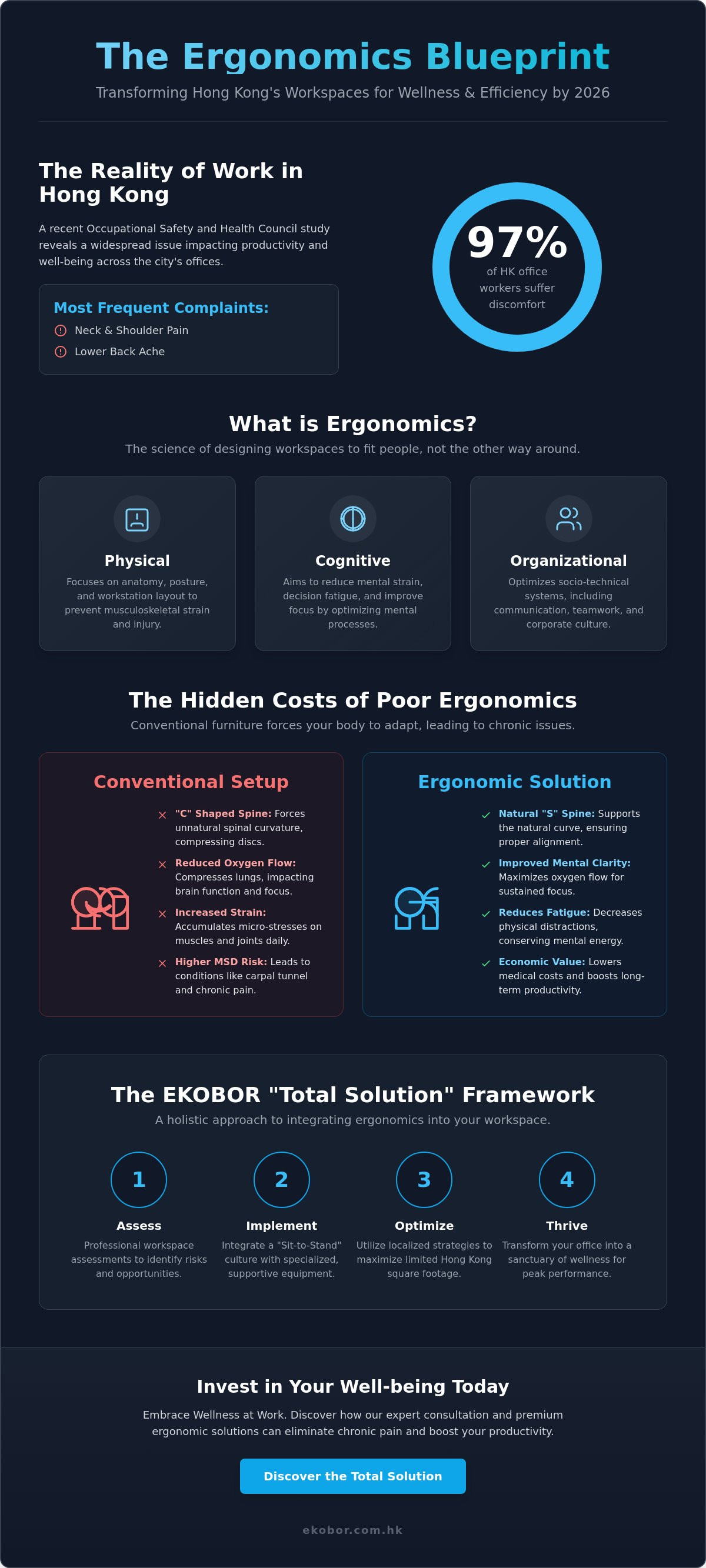
A recent study by the Occupational Safety and Health Council found that 97% of Hong Kong office workers suffer from musculoskeletal discomfort, with neck and shoulder pain being the most frequent complaints. It's a reality most of us face while working in cramped apartments or high-pressure offices across Central and Kowloon. You likely feel that familiar ache in your lower back by 3:00 PM and assume it's just an unavoidable part of a productive day. We agree that physical fatigue shouldn't be your constant companion at the desk. This guide will show you how the science of ergonomics can transform your physical health and work efficiency in the modern Hong Kong workspace. We'll explore how to implement a Total Solution for your posture, from Sit-to-Stand transitions to optimizing limited square footage for maximum musculoskeletal health. It's time to embrace Wellness at Work and eliminate chronic pain for good as we head into 2026.
Key Takeaways
- Master the science of ergonomics to design a workspace that prioritizes your physiological needs and long-term vitality.
- Uncover the hidden health costs of sedentary work and learn how to safeguard your spinal alignment against the limitations of conventional furniture.
- Learn localized strategies for maximizing limited Hong Kong square footage to create a high-performance home or corporate office.
- Discover the EKOBOR "Total Solution" framework for integrating a "Sit-to-Stand" culture that boosts efficiency and physical well-being.
- Understand the value of professional workspace assessments in transforming your environment into a premium sanctuary of wellness at work.
What is Ergonomics? Understanding the Science of Human Factors
Ergonomics is much more than a buzzword for expensive office furniture. It's the scientific discipline of designing systems, products, and environments to fit the people who use them. By studying the Science of Human Factors, experts create workspaces that respect the natural limits of the human body. While early 20th-century ergonomics focused strictly on industrial efficiency and factory output, the focus in 2026 has shifted toward holistic wellness and long-term vitality. Ekobor understands that a "Total Solution" for the modern professional requires a deep empathy for the physical toll of the desk-bound workday.
To better understand this concept, watch this helpful video:
The primary goal of this field is to optimize human well-being while enhancing overall system performance. This discipline is often called Human Factors Engineering. It ensures that your office setup supports your health instead of forcing your body to adapt to rigid, poorly designed equipment. When you prioritize ergonomics, you aren't just buying a chair; you're investing in a sustainable lifestyle that prevents burnout and physical decay.
The Three Main Domains of Ergonomics
Physical ergonomics is the most recognized branch. It addresses anatomy, physiology, and biomechanics as they relate to physical activity. This domain looks at how your posture, repetitive movements, and workstation layout impact your musculoskeletal health. Cognitive ergonomics focuses on mental processes like perception, memory, and reasoning. It aims to design work environments that reduce mental strain and decision fatigue. Organizational ergonomics focuses on optimizing socio-technical systems. This includes communication structures and teamwork patterns within the unique constraints of the Hong Kong corporate environment.
Why Ergonomics Matters in 2026
The narrative surrounding workplace health has evolved significantly over the last decade. We've moved past the simplistic idea that "sitting is the new smoking" to embrace dynamic movement patterns through a "Sit-to-Stand" culture. In Hong Kong's high-pressure business districts, preventing Musculoskeletal Disorders (MSDs) is a top priority for 2026. Data from the Occupational Safety and Health Council in Hong Kong has historically shown that localized physical strain accounts for a significant portion of workplace absences. Conditions like carpal tunnel syndrome or chronic lumbar strain can be avoided through proactive, premium design. Ergonomics is the intersection of human biology and workplace design.
- Physical Health: Reduces the risk of chronic back pain and repetitive strain injuries.
- Mental Clarity: Decreases fatigue, allowing for sharper focus during long hours.
- Economic Value: Lowers medical costs and improves long-term productivity for Hong Kong firms.
Embracing "Wellness at Work" means recognizing that your physical environment is a tool for success. By integrating specialized equipment that supports spinal health, you transform your daily routine into a health-conscious experience.
The Hidden Costs of Poor Ergonomics in the Modern Workplace
Many professionals in Hong Kong believe that a standard dining chair and a flat table are sufficient for a full day of work. This is a common misconception that overlooks the physiological demands of the human body. The science of ergonomics isn't about luxury; it's about mechanical necessity. When you use furniture that doesn't support your natural anatomy, your body compensates by straining muscles and misaligning joints. Over a ten hour shift in a high pressure Central office, these micro-stresses accumulate into debilitating conditions.
A sedentary lifestyle combined with poor equipment forces the spine into a "C" shape rather than its natural "S" curve. This compression limits lung capacity and reduces oxygen flow to the brain, directly impacting your cognitive focus. If you're constantly shifting in your seat to find comfort, your brain is wasting energy on physical management instead of high level tasks. The financial reality is also stark. In Hong Kong, a single private physiotherapy session can cost between HK$800 and HK$1,500. When you multiply this by the months required to treat a chronic injury, the "savings" from using a regular chair vanish instantly.
Research published by major outlets highlights how Wellness and Productivity are inextricably linked to the physical environment. Neglecting this connection leads to a cycle of fatigue and medical expenses that can be avoided with a proactive approach to your "Total Solution" workspace.
Common Musculoskeletal Disorders (MSDs)
- Lower back pain: This remains the primary complaint for 80% of office workers. It's often caused by a lack of lumbar support which leads to disc degeneration over time.
- Rotator cuff and shoulder injuries: These occur when a desk is too high, forcing you to "shrug" your shoulders for hours. This constant tension leads to chronic inflammation.
- Repetitive Strain Injuries (RSI): Using a non-ergonomic mouse or keyboard at the wrong angle causes median nerve compression, often resulting in Carpal Tunnel Syndrome.
The Productivity Gap
Businesses often focus on absenteeism, but "presenteeism" is the silent killer of growth. This occurs when employees are at their desks but performing at 20% lower efficiency because of physical discomfort. Movement is the key to mental alertness. When you sit still for hours, your blood circulation slows down, leading to brain fog and lethargy. This is why incorporating a Sit-to-Stand culture is vital for modern Hong Kong firms. By utilizing strategic office workspace planning, companies can design environments that encourage micro-movements, keeping the staff energized and focused throughout the day. Investing in a comprehensive ergonomic setup ensures that "Wellness at Work" is a reality rather than just a slogan, protecting both your health and your bottom line.
Ergonomics in the Hong Kong Context: Overcoming Urban Constraints
Hong Kong's urban landscape presents unique hurdles for physical health. With an average living space of just 161 square feet per person according to 2021 Census data, traditional office setups often fail. We need a localized approach to ergonomics that respects these spatial limits while addressing a high-intensity work culture. Asian body types often require furniture with lower minimum heights and shallower seat depths. This ensures that the 5th percentile of the population can still maintain proper blood circulation and spinal support without their feet dangling or their backs losing contact with the chair.
Optimizing Small Workspaces
Small apartments demand vertical solutions. A standing desk hong kong setup utilizes vertical space rather than floor footprint. This allows you to integrate a professional workstation into a tight corner without compromising your "Sit-to-Stand" goals. In 2026, multi-functional furniture has become the standard for dual-purpose living areas. You'll find that utilizing a monitor arm hong kong is essential for these compact zones. It lifts the screen off the desk surface, clearing clutter and improving focus while ensuring your neck stays in a neutral position. This setup transforms a cramped desk into a spacious "Total Solution" for productivity.
- Select desks with a footprint under 100cm for studio apartments.
- Use monitor arms to reclaim up to 25% of your usable desk surface.
- Choose chairs with adjustable seat depths to accommodate shorter leg lengths common in Asian demographics.
Noise and Privacy in Open-Plan HK Offices
Noise pollution in districts like Central or Kwun Tong isn't just a distraction; it's a cognitive ergonomic risk. Recent research suggests that ambient noise in dense offices can decrease productivity by up to 66%. This is where the concept of the ergonomic sanctuary becomes vital for mental health. Using acoustic desk dividers allows employees to create "focus zones" within a shared space. These dividers dampen sound and provide the visual privacy necessary for deep work. It's a key component of our "Wellness at Work" philosophy. High-pressure HK environments also demand a culture of micro-breaks. Moving for just two minutes every hour can offset the musculoskeletal strain of a 10-hour workday, keeping your ergonomics strategy effective from morning until late evening.
The "Total Solution" Framework: Implementing Ergonomics Successfully
At EKOBOR, we view ergonomics as a holistic ecosystem rather than a collection of isolated products. Our "Total Solution" philosophy addresses the hierarchy of ergonomic needs, starting from the chair and expanding to the desk, peripherals, and the surrounding environment. This framework ensures that every element of your workspace works in harmony to support your musculoskeletal health.
To achieve wellness at work, we teach the 90-90-90 rule for posture. This clinical standard requires your elbows, hips, and knees to remain at 90-degree angles. This alignment minimizes disc pressure and prevents the slouching that leads to chronic back pain. We also champion a "Sit-to-Stand" culture. Movement intervals are essential; transitioning between sitting and standing every 40 minutes increases blood circulation and prevents the metabolic slowdown associated with sedentary behavior.
Choosing the Right Ergonomic Chair
Selecting a high-quality ergonomic chair hk is the foundation of your setup. A proper chair must support the natural S-curve of the spine to maintain lumbar health. For those who seek a more active workday, models like the HAG Capisco facilitate "active sitting," allowing you to move while seated. Essential adjustability criteria include customizable lumbar support, seat depth, and armrest height to accommodate the diverse body types found in the Hong Kong workforce.
The Dynamic Desk Setup
An electric standing desk is the center of a dynamic office. When choosing a desk, consider motor performance. Dual motor systems offer greater stability and weight capacity than single motors, which is vital for multi-monitor setups. Your ideal desk height should allow your forearms to rest parallel to the floor without shrugging your shoulders. We also integrate height-adjustable solutions for children, ensuring they develop healthy postural habits from a young age as they grow.
Peripheral Ergonomics
Final adjustments to your peripherals prevent repetitive strain injuries. Follow these guidelines for a complete setup:
- Monitor Placement: Position the top of your screen at eye level to keep your neck in a neutral position.
- Keyboard and Mouse: Keep these close to your body to prevent wrist extension and shoulder reaching.
- Environment: Use anti-fatigue mats to reduce joint pressure while standing and ensure localized lighting to prevent eye strain.
Ready to transform your office into a hub of vitality? Explore our Total Solution packages and start your journey toward better health today.
Transforming Your Workspace with EKOBOR: Expert Consultation and Quality
EKOBOR isn't just a furniture retailer; we're your dedicated partner in achieving ergonomic excellence. In a city like Hong Kong, where office space is at a premium and work hours are often intensive, the right setup is a medical necessity rather than a luxury. We provide a Total Solution that bridges the gap between aesthetic design and musculoskeletal health, ensuring your body is supported through every hour of the day. Our goal is to transform how you perceive your work environment, moving away from stagnant seating toward a dynamic, health-conscious lifestyle.
Our Professional Consultation Process
We begin by identifying the specific ergonomic gaps that cause fatigue, tension, and chronic pain. Our team conducts detailed workspace assessments to understand how you and your team move. For a finance firm in Central or a tech startup in Cyberport, the physical requirements differ significantly. We tailor our recommendations to these unique industry demands, ensuring that every desk and chair serves a clear physiological purpose. Beyond the initial planning, we provide on-site installation and consistent after-sales support to secure your long-term wellness. Research indicates that proper ergonomics interventions can reduce musculoskeletal complaints by up to 54%, which directly impacts your team's focus and efficiency.
Sustainable and Premium Solutions
We curate a selection of world-class brands like HAG, RH, and Ergotron because they prioritize human physiology over short-term trends. These products use high-quality materials, such as industrial-grade stainless steel and reinforced polycarbonate, to ensure they remain functional for over a decade. Investing in premium ergonomics is a long-term health asset that pays dividends in physical vitality and mental clarity. You'll find our Sit-to-Stand solutions particularly effective for breaking the sedentary cycle that dominates modern urban life. Our commitment to sustainability means we choose products that last, reducing waste while protecting your spine.
Experience the transformation for yourself by visiting our showrooms in Causeway Bay or Kowloon Bay. Our expert consultants are ready to guide you through our range of solutions, helping you feel the difference that proper lumbar support and height-adjustable surfaces make. We understand the physical struggles of the contemporary office worker, and we're here to provide the supportive partnership you need. Join the Wellness at Work movement today to transform your office into a sanctuary of productivity and health.
Elevate Your Health and Performance for 2026 and Beyond
The future of work in Hong Kong demands more than just a desk and a chair. It requires a fundamental shift toward a "Sit-to-Stand" culture that prioritizes your musculoskeletal health. By adopting a Total Solution framework, you can mitigate the hidden costs of a sedentary lifestyle and transform even the most compact urban office into a hub of vitality. Since 2010, EKOBOR has led this movement by blending clinical expertise with premium design. As the exclusive Hong Kong retailer for world-class HAG and RH ergonomic chairs, we understand that true wellness at work is built on precise spinal support and movement.
Don't let poor ergonomics dictate your physical longevity or productivity. You can visit our dedicated showrooms in Causeway Bay and Kowloon Bay for a professional fitting with our wellness consultants. It's time to invest in a workspace that supports your body as much as your ambitions. Professional alignment and quality equipment are the foundation of a sustainable career in our fast-paced city.
Explore EKOBOR’s Total Solution for a Healthier Workspace
Your journey toward a pain-free, high-performance work life starts with a single, conscious choice for better health.
Frequently Asked Questions
What is the most important part of an ergonomic workspace?
The most important part of an ergonomic workspace is your ability to maintain dynamic movement throughout the day. While a high-quality chair provides vital spinal support, a Sit-to-Stand desk is essential for a Total Solution. Research from the University of Waterloo suggests a 1:1 or 1:3 ratio of sitting to standing to reduce musculoskeletal health risks. Without movement, even the best posture leads to physical fatigue and long-term strain.
How often should I switch between sitting and standing at my desk?
You should switch between sitting and standing every 30 to 45 minutes to optimize blood flow and metabolic health. A 2022 study published in the Journal of Occupational and Environmental Medicine indicates that alternating positions improves productivity by 46 percent. By adopting a Sit-to-Stand culture at home, you prevent the negative effects of a sedentary lifestyle. This consistent rotation keeps your energy levels high and protects your long-term spinal health.
Is an ergonomic chair worth the investment if I only work part-time from home?
An ergonomic chair is a vital investment even for part-time work because spinal compression begins after just 120 minutes of sitting. Investing in premium seating ensures your musculoskeletal health doesn't decline during those 15 to 20 hours per week at home. Proper lumbar support and adjustable armrests prevent the cumulative trauma that often leads to chronic pain. Your health deserves a Total Solution, regardless of how many hours you log at your desk.
How can I improve my ergonomics in a very small Hong Kong apartment?
You can optimize a small Hong Kong apartment by using compact Sit-to-Stand desks with a footprint of less than 0.5 square meters. Many HK residents use monitor arms to clear desk space, which provides 30 percent more usable surface area for other tasks. These space-saving tools allow you to transform a bedroom corner into a Wellness at Work station without cluttering your living area. Improving your ergonomics doesn't require a large office, only the right specialized equipment.
What is the correct height for my ergonomic desk?
Your ergonomic desk should be set so your elbows maintain a 90-degree angle while your wrists remain neutral on the surface. For a person 170cm tall, this usually means a sitting height of 68cm and a standing height of 105cm. Correct height prevents strain on the trapezius muscles and reduces the risk of carpal tunnel syndrome. Adjusting your screen so the top third is at eye level completes this healthy, clinical alignment.
Can ergonomics help reduce existing neck and shoulder pain?
Professional ergonomics directly reduces existing neck and shoulder pain by eliminating the physical stressors that cause muscle tension. A 2021 clinical review found that ergonomic interventions reduced reported musculoskeletal pain in 75 percent of office workers within six months. By providing proper spinal support and encouraging movement, these solutions address the root cause of "tech neck." This transition from pain to comfort is a core benefit of a professional workspace setup.
Does EKOBOR provide ergonomic solutions for children and students?
EKOBOR provides a Total Solution for students through height-adjustable desks and chairs designed for children aged 5 to 18. Growing bodies are particularly vulnerable to poor posture, which can lead to permanent spinal issues later in life. Our student range supports healthy development by adapting to their changing height, ensuring they maintain Wellness at Work from a young age. This proactive approach helps children stay focused and comfortable during long study sessions.
How do I know if my current office chair is truly ergonomic?
A truly ergonomic chair must offer at least five points of adjustment: seat height, seat depth, lumbar support, backrest tilt, and armrest height. If your chair lacks independent lumbar tension control, it isn't providing the specific spinal support your body requires. High-quality ergonomic furniture also uses breathable, sustainable materials that regulate temperature during long work hours. Test your chair by checking if your feet stay flat on the floor while your lower back is fully supported.


