



Small Study Space Ideas: Optimising Tiny Hong Kong Nooks for Ergonomic Health (2026)
What if the square footage of your Hong Kong apartment wasn't the true barrier to your productivity, but rather the way your furniture ignores your physiology? You likely feel that a cramped corner in a Mid-Levels or Kowloon flat forces an unfair compromise between your professional output and your long-term physical health. It's a common struggle to battle persistent lower back tension and neck strain while trying to focus in a cluttered, makeshift environment. We recognize that searching for effective small study space ideas often leads to aesthetic fixes that unfortunately neglect essential musculoskeletal health.
At Ekobor, we believe your environment should be a partner in your vitality. This guide will show you how to apply our "Total Solution" philosophy to even the most compact nook, ensuring your spinal support remains a priority. You'll discover how to integrate a sit-to-stand culture into a few square feet to combat the risks of a sedentary lifestyle. We will walk through specific ergonomic configurations and space-saving layouts that transform your home into a professional sanctuary of wellness at work.
Key Takeaways
- Learn how to reclaim underutilised "dead zones," such as window sills and corridor ends, to create high-performance work areas within compact Hong Kong apartments.
- Discover why a premium standing desk serves as a "Total Solution" for small study space ideas, providing essential spinal support while maintaining a minimal spatial footprint.
- Understand the critical role of height-adjustable furniture in supporting children’s musculoskeletal development and ensuring healthy spinal alignment during growth years.
- Master the 20-20-20 rule and strategic cable management to reduce technical anxiety and enhance visual comfort in narrow urban environments.
- Unlock the power of verticality by using wall-mounted shelving and monitor arms to clear desk real estate for a seamless, ergonomic workflow.
Smart Layouts for Compact Hong Kong Study Nooks
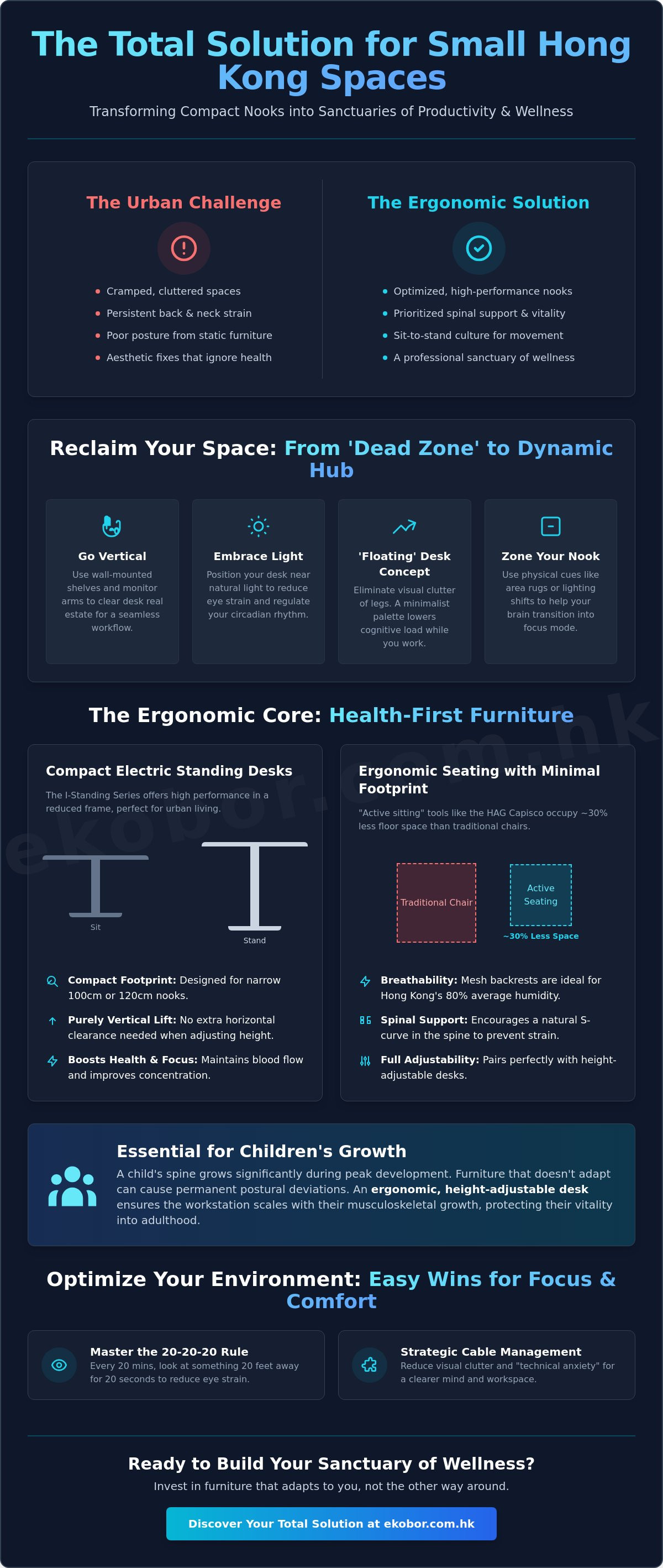
Living in a high-density city like Hong Kong requires a radical rethink of every square foot. Traditional bulky desks often compromise Ergonomics, leading to musculoskeletal strain in as little as 20 minutes of poor posture. By identifying 'dead zones' like deep window sills or the ends of narrow corridors, you can implement effective small study space ideas that don't sacrifice your spinal health. Ekobor advocates for a "Total Solution" approach where even a 5-square-foot nook becomes a hub for vitality. To better understand how to visualize these compact setups, watch this helpful video on functional desk organization: Clearing the floor is vital for both mental clarity and physical safety. Wall-mounted monitor arms and shelving systems transform vertical surfaces into storage hubs, freeing up the primary work surface for essential tasks. We recommend zoning your apartment using physical cues like area rugs or lighting shifts. Positioning your desk near natural light sources in HK apartments is a priority, as it reduces eye strain and regulates your circadian rhythm. This mental boundary helps your brain transition from a state of rest to one of focused productivity.The 'Floating' Study Concept
Floating desks eliminate the visual clutter of traditional legs, making a 300-square-foot studio feel significantly more open. Pair these with a minimalist palette of whites, light oaks, or soft greys to reduce visual noise. This design choice isn't just about style; it's a wellness strategy that lowers cognitive load while you work. By keeping the floor clear, you create a seamless flow that encourages movement, which is the cornerstone of our "Sit-to-Stand" culture.Corner Optimization Strategies
Selecting Compact Ergonomic Furniture for Health & Growth
When exploring small study space ideas in Hong Kong, the focus often lands on storage, yet the furniture itself is the true "Total Solution" for long-term health. Static desks trap users in a sedentary cycle, which is a primary trigger for chronic back pain. For children, the physical environment is even more critical. Clinical data suggests that a child's spine can grow significantly during peak development years, and furniture that doesn't adapt can cause permanent postural deviations. Integrating a ergonomic desk for kids ensures the workstation scales alongside their musculoskeletal growth, protecting their vitality into adulthood.
Compact Electric Standing Desks: The I-Standing Series
The I-Standing Series addresses the specific constraints of urban living by offering high-performance tech in a reduced frame. These single-motor electric desks are designed for narrow 100cm or 120cm nooks, providing a seamless sit-to-stand transition without requiring extra horizontal clearance. Because the movement is strictly vertical, you won't hit surrounding wardrobes or beds when adjusting the height. This flexibility is essential for maintaining blood flow and focus. An Indoor Environmental Quality study demonstrates that physical comfort and ergonomic support are directly linked to improved concentration and performance levels in students.
Ergonomic Seating with Minimal Footprints
Bulky chairs are the enemy of effective small study space ideas. We advocate for "active sitting" tools like the HAG Capisco. Its unique saddle-inspired design allows you to sit in multiple positions while occupying roughly 30% less floor space than a traditional office chair. It tucks completely under the desk when not in use, keeping walkways clear. Consider these factors for the Hong Kong climate:
- Breathability: Choose mesh backrests over heavy fabrics to handle the city's 80% average humidity.
- Support: Ensure the chair encourages a natural S-curve in the spine.
- Adjustability: Look for chairs that pair well with a kids height adjustable desk to foster early ergonomic habits.
Investing in pieces that prioritize movement doesn't just save space; it transforms a cramped corner into a hub of productivity. You can view our wellness-driven designs to see how compact furniture meets professional health standards.
Optimising the Environment: Lighting, Air, and Order
Creating a healthy workspace in a compact Hong Kong apartment requires more than just furniture placement. It's about engineering an atmosphere that supports your biological needs. When implementing small study space ideas, you should prioritise your visual health by applying the 20-20-20 rule. Every 20 minutes, look at something six metres away for 20 seconds. Positioning your desk near a window or facing an open doorway provides this essential distance viewing. This simple adjustment prevents the ciliary muscles in your eyes from fatiguing in tight quarters where your focal point is usually restricted.
Your mental state is also influenced by what you don't see. Technical clutter and tangled wires trigger a subtle but constant stress response. Effective cable management acts as a mental health tool; it removes visual noise that contributes to daily anxiety and cognitive load. Pair this order with biophilic design. Adding a single resilient plant, such as a Snake Plant, can improve indoor air quality and boost cognitive focus. Before finalizing your setup, seek a professional ergonomic chair assessment. A chair that fits your unique spinal curvature is the foundation of long-term musculoskeletal health, especially when your movement is limited by a smaller room footprint.
Lighting for Visual Wellness
Standard ceiling lights often create harsh shadows and glare that lead to eye strain. You can prevent headaches by layering ambient light with dedicated task lighting. In Hong Kong's smaller rooms, traditional desk lamps consume valuable real estate. Monitor light bars are a superior alternative. These devices clip onto your screen to illuminate your documents without taking up any desk space or causing screen reflections. This ensures your small study space ideas remain functional without sacrificing visual comfort.
The Final Polish: Organisation & Air
A clear desk promotes deep work and reduces the feeling of being cramped. Use slim, under-desk drawers to store stationery and devices, keeping your primary surface dedicated to the task at hand. Remember that your body is designed for movement. Integrate micro-breaks and regular sit-to-stand transitions to keep your blood flowing and your spine neutral. This dynamic approach is the core of our "Total Solution" for urban wellness, ensuring that your physical health isn't compromised by your floor plan.
Ready to transform your home? Visit our Causeway Bay or Kowloon Bay showrooms for a personalised consultation. Let our experts help you build a workspace that protects your health through professional ergonomic design.
Elevate Your Wellness at Work in the Heart of Hong Kong
Designing a productive nook in a high-density urban environment requires more than just clever storage. It demands a Total Solution that prioritizes your musculoskeletal health. By implementing these small study space ideas, you've learned how to balance spatial constraints with clinical-grade spinal support. Optimizing your airflow and lighting ensures that even the most compact corner becomes a sanctuary for focus and vitality.
Since 2010, EKOBOR has specialized in the unique architectural challenges of the Hong Kong market. Founded by health-conscious experts Keira and her husband, we've spent over 15 years advocating for a Sit-to-Stand culture. As the exclusive distributor of world-renowned HAG and RH ergonomic chairs, we provide the tools necessary to combat a sedentary lifestyle. It's time to stop compromising your posture for your floor plan. You can achieve professional-grade efficiency regardless of your square footage.
Transform your small space with EKOBOR’s Ergonomic Solutions today. Your journey toward a healthier, more energized work life starts with a single, purposeful adjustment to your environment.
Frequently Asked Questions
How can I fit a study desk in a bedroom with very little space?
You can fit a desk in a cramped bedroom by utilizing vertical wall space or narrow alcoves. In Hong Kong, where the average bedroom size is approximately 50 to 80 square feet, a compact 80cm width desk often provides the best balance. Consider wall-mounted floating desks or C-shaped tables that slide over the bed frame to maximize floor area. These small study space ideas ensure you don't sacrifice musculoskeletal health for square footage.
Are standing desks worth it for small Hong Kong apartments?
Standing desks are highly effective for small apartments because they encourage a sit-to-stand culture that combats the 60 percent increase in sedentary health risks. Compact electric models with a footprint as small as 60cm by 60cm fit into corners while providing a total solution for spinal alignment. By alternating positions every 30 minutes, you improve circulation and energy levels without needing a large, dedicated office room.
What is the minimum size for a functional home study area?
A functional home study area requires a minimum footprint of 1.2 square meters to allow for basic movement and ergonomic positioning. This space should accommodate a desk surface of at least 80cm width and 60cm depth to maintain a healthy 50cm viewing distance from your monitor. Adhering to these dimensions prevents the hunched posture common in tight spaces, which leads to 45 percent of reported neck strain cases in urban professionals.
How do I choose an ergonomic chair that doesn't look bulky?
Look for chairs with a slim profile design and breathable mesh materials that provide essential lumbar support without the visual weight of traditional leather chairs. Choose models with flip-up arms or a compact five-star base that tucks completely under your desk when you're done. These small study space ideas help maintain a seamless aesthetic in your living area while ensuring your spine receives the precise support needed for long hours.


