



Kids Study Sit-Stand Desk and Chairs: The 2026 Hong Kong Buying Guide
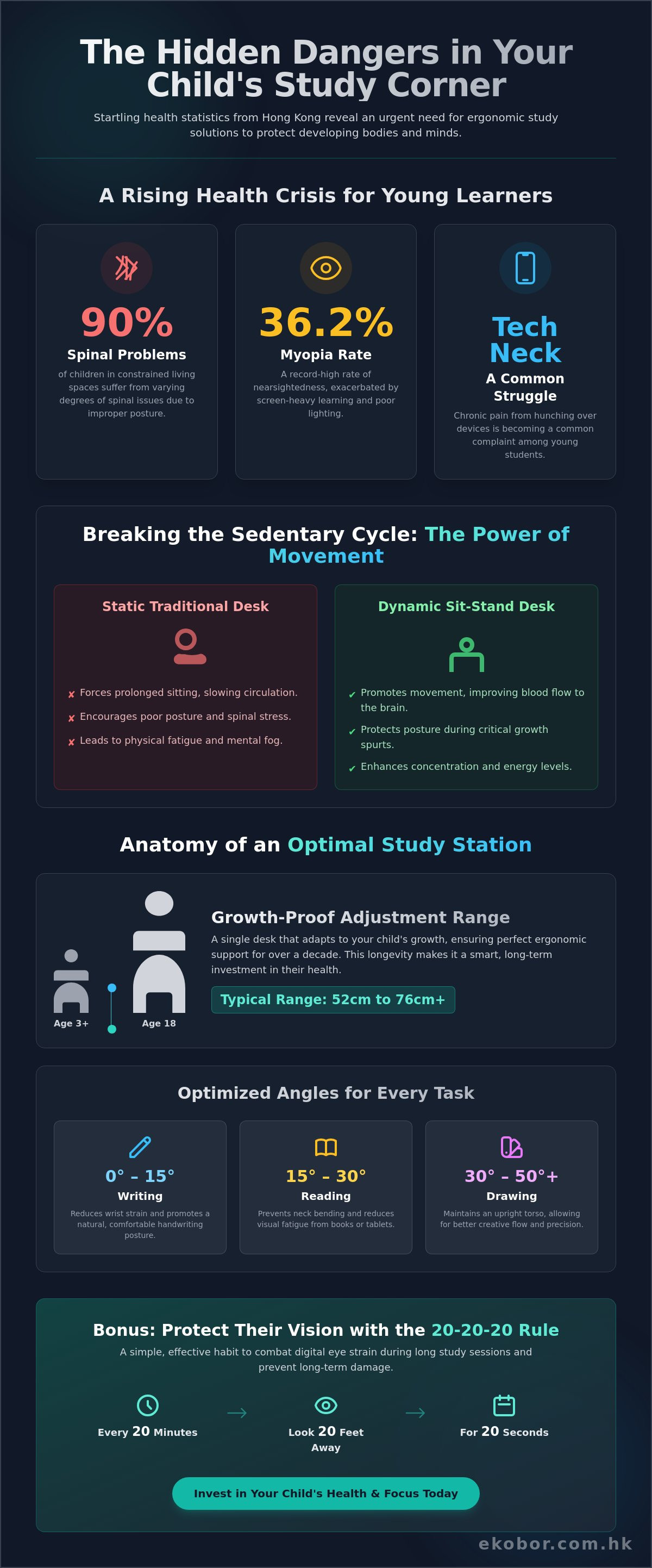
Did you know that a 2024 survey by the Society for Community Organization found that 90% of children in Hong Kong's constrained living environments suffer from varying degrees of spinal problems? With myopia rates hitting a record high of 36.2% and "tech neck" becoming a common struggle, the physical cost of academic excellence is rising. Choosing the right kids study sit-stand desk and chairs is no longer a luxury; it's a vital health intervention for your child's developing physiology. You need a solution that stops the slouching and fits your home without requiring a replacement every few years as they grow.
It's stressful to watch your child lose focus while their posture collapses during long revision hours. We believe a study area should be a dynamic tool for wellness rather than a static surface that encourages sedentary habits. This guide will help you discover how to select an adjustable station that protects your child's spinal alignment and enhances their concentration from age 3 through to 18. We'll break down the new safety standards effective August 1, 2026, and show you how movement-based study habits can transform their daily learning experience into a journey of long-term vitality.
Key Takeaways
- Learn how movement-based study habits improve physiological blood flow to the brain, directly enhancing your child's focus during high-pressure revision.
- Discover why the best kids study sit-stand desk and chairs feature a wide adjustment range to ensure a decade of perfect ergonomic support as your child grows.
- Explore space-saving solutions like the Mini Shark Series, designed to provide a premium study environment within the unique constraints of Hong Kong apartments.
- Find out how a tiltable desktop and the 20-20-20 rule work together to prevent "tech neck" and reduce digital eye strain during screen-heavy learning.
Why Kids Need Sit-Stand Desks: The Science of Movement and Focus
A kids study sit-stand desk and chairs solution is a height-adjustable workstation designed to support ergonomic alignment from early childhood through adolescence. In the context of Hong Kong's rigorous academic environment, these tools are essential for long-term health. You might wonder what are sit-stand desks and why they matter for a child. Essentially, they allow a student to transition between sitting and standing throughout their study session. This movement is critical because it stimulates blood flow to the brain. When a child stands, their heart rate increases slightly, delivering more oxygenated blood to the prefrontal cortex, which is the area responsible for executive function and concentration.
To better understand how these dynamic workstations function in a home setting, watch this helpful video:
The sedentary trap is a real concern in Hong Kong, where students often spend six to eight hours daily at a desk. Traditional static furniture forces the body into a fixed position, leading to physical fatigue and mental fog. By integrating a high-quality kids study sit-stand desk and chairs system, parents can break this cycle. Dynamic sitting and standing intervals prevent the early onset of chronic back pain and spinal misalignment. It's a proactive approach to wellness that views the study area as a dynamic tool rather than just a place for homework.
Breaking the Cycle of Sedentary Study Habits
Prolonged sitting impacts a child's metabolic health and energy levels by slowing down circulation. If you notice your child fidgeting, it's actually their body's way of signaling a need for a change in posture. Instead of seeing it as a lack of focus, view it as a physical requirement. Transitioning to a standing position acts as a mental reset. It provides a natural break in the intensity of revision, allowing the brain to recharge without the child having to leave their workspace.
Posture Protection During Growth Spurts
During rapid growth phases, the spine is particularly vulnerable to "text neck" and kyphosis, or slouching. Adjustable furniture ensures the desk height matches the child's elbow level perfectly at every age, preventing them from leaning forward or hunching over their work. Ergonomics protects the developing spine during critical growth phases by maintaining the natural S-curve of the back. This alignment is vital for avoiding the spinal issues that often emerge in the high-pressure Hong Kong school system.
Key Features to Compare: What Makes a Quality Kids Study Station?
Selecting a high-quality kids study sit-stand desk and chairs set requires looking beyond mere aesthetics. You need a workstation that provides a clear growth path, evolving alongside your child's physical development. Prioritize a wide adjustment range, typically starting from 52cm for a young child and extending to 76cm or more for a teenager. This longevity ensures your investment remains ergonomically sound for over a decade. Beyond physical alignment, research into the neurocognitive benefits for students suggests that these active environments can actually boost engagement and academic performance by keeping the mind alert.
The Ergonomics of a Tiltable Desktop
A flat surface isn't ideal for every academic task. A tiltable desktop is essential for maintaining a healthy cervical spine and reducing eye strain. We recommend specific angles for different activities:
- 0 to 15 degrees: Ideal for writing to reduce wrist strain and improve handwriting.
- 15 to 30 degrees: Perfect for reading to prevent neck bending and eye fatigue.
- 30 to 50+ degrees: Best for drawing and creative work to maintain an upright torso.
Safety and Durability Checklist
Safety features are non-negotiable for children's furniture. Quality desks include anti-collision sensors that stop the motor if an object is detected during height changes. Look for rounded corners and anti-pinch designs in the lifting mechanisms to protect small fingers. Material integrity is equally vital; only accept E0 or E1 grade non-toxic materials to ensure a safe breathing environment. If you're looking for a station that meets these rigorous health standards, you can explore our certified ergonomic collections. High-quality motors in electric models should operate quietly enough to avoid disturbing a quiet study environment.
Choosing the Right Ergonomic Chair
The desk is only half the equation. A standard chair often lacks the necessary adjustments for a growing body, leading to slouching. You need adjustable seat depth and backrest height to facilitate the "90-90-90" alignment, where the elbows, hips, and knees are all at right angles. For younger children, integrated footrests are vital to prevent dangling legs, which can restrict circulation and cause restlessness. For a deeper dive into professional seating, check our ergonomic chair hk guide for advanced seating options.
Top EKOBOR Picks: Comparing the Best Kids Study Collections
Selecting the right kids study sit-stand desk and chairs requires balancing clinical ergonomic requirements with the physical realities of Hong Kong living. Our collections are designed to bridge this gap, offering specialized solutions for every stage of a child's development. Research highlighting the neurocognitive benefits of standing desks suggests that these active workstations do more than protect the spine; they actively support the executive function and working memory required for academic success. Whether you're furnishing a compact corner or a dedicated study room, we've developed options that prioritize long-term wellness.
Mini Shark - The Small Space Champion
Hong Kong apartments often demand creative furniture placement. The Mini Shark series addresses this with a compact 80cm width that fits perfectly into bedroom nooks or subdivided spaces. Unlike competitors who use basic laminates, this series features a solid wood tabletop and integrated storage drawers. It's the ideal choice for primary school students who need a high-performance workspace without a bulky footprint. The manual adjustment is smooth and reliable, making it a sustainable choice for urban families.
SEAL - Premium Ergonomics for Older Students
As academic demands increase, so does the need for a larger workspace. The SEAL collection offers a more expansive desktop, ranging from 100cm to 120cm, which comfortably accommodates laptops, textbooks, and tablets. Its sophisticated aesthetic avoids the "toy-like" appearance of many children's desks, blending seamlessly with modern home decor. This collection is built for durability and comes with a 10-year on-site warranty from EKOBOR, ensuring your child's posture is protected throughout their secondary school years.
Baby UNICORN - The Complete Starter Set
For parents of children aged 3 and up, the Baby UNICORN provides a perfect entry point into ergonomic study habits. This affordable bundle includes both a height-adjustable desk and a supportive chair, removing the guesswork from creating a healthy environment. Vibrant color options help children take ownership of their space, while the simple adjustment mechanism allows for quick changes as they grow. You can view our full collection of starter sets to find the right fit for your home.
When choosing between models, consider the adjustment mechanism. Dual-motor electric desks offer effortless, whisper-quiet transitions at the touch of a button, which is ideal for encouraging frequent posture changes. Manual hand-crank models provide a simple, electricity-free alternative that remains highly durable. Both options effectively combat the sedentary habits that lead to physical fatigue during intense revision sessions.
Implementation: Setting Up the Perfect Study Zone in Hong Kong
Creating an effective study environment in a compact Hong Kong apartment involves more than just placing furniture. It requires a thoughtful arrangement that maximizes natural light while minimizing screen glare, which can lead to significant eye fatigue. We recommend using cable management solutions to hide wires. This reduces the mental clutter that often distracts students during intense revision. For long-term value, maintain solid wood surfaces by wiping them with a slightly damp cloth and ensure electric motors remain free of dust to keep the lifting mechanism operating smoothly for years to come.
Integrating a high-quality kids study sit-stand desk and chairs system makes it easier to follow the '20-20-20' rule. Every 20 minutes, your child should look at something 20 feet away for 20 seconds. Transitioning to a standing position provides a natural physical prompt for these eye breaks. This habit helps mitigate the vision strain associated with the high-pressure academic culture in our city.
Small Space Ergonomic Hacks
When floor space is limited, verticality is your best friend. Add shelves or pegboards directly above the sit-stand desk to keep the work surface clear for textbooks and tablets. In multi-purpose rooms, a mobile chair is often superior to a fixed one, as it allows the space to be reconfigured quickly for other activities. For a comprehensive setup checklist, refer to our ergonomic desk for kids guide.
The Parent's Role in Posture Training
Teaching your child to recognize their body's physical cues is a vital part of their wellness journey. Encourage them to stand up the moment they feel the urge to fidget. We suggest setting specific standing intervals, such as standing for 15 minutes after every 45 minutes of seated work. As your child experiences growth spurts, regularly monitor the 90-degree angle rule for their elbows and knees, adjusting the equipment to maintain perfect physiological alignment.
Next Steps: Visit the EKOBOR Showrooms
While online guides are helpful, nothing replaces a professional 'fit test'. We invite you to visit our showrooms in Causeway Bay or Kowloon Bay to experience our collections firsthand. Consulting with our ergonomic specialists ensures you find the perfect match for your child's current height and future growth trajectory. It's an opportunity to see how our designs bridge the gap between medical necessity and aesthetic appeal. Browse our full Kids Study Sit-Stand Desk collection and invest in your child's health today.
Secure Your Child's Future Through Ergonomic Excellence
Choosing the right kids study sit-stand desk and chairs is a proactive step toward protecting your child’s spinal integrity and enhancing their mental clarity. You’ve seen how dynamic movement fosters better focus and how specialized features like tiltable desktops prevent the early onset of postural strain. In a high-pressure academic landscape, these ergonomic tools are essential for maintaining long-term vitality and academic performance.
We invite you to partner with a brand rooted in a century of expertise. Our parent company is ISO9001 certified and brings over 110 years of history to every design, ensuring your child receives a station built on clinical knowledge. To make your transition effortless, we provide free delivery and professional installation throughout Hong Kong. Every investment is further secured by our comprehensive 10-year on-site warranty, giving you peace of mind as your child grows.
Take the next step in optimizing their study environment and fostering healthy habits that last a lifetime. Shop the EKOBOR Kids Adjustable Desk Collection and empower your child to reach their full potential with comfort and confidence.
Frequently Asked Questions
At what age should a child start using a sit-stand desk?
Children can begin using a height-adjustable workstation as early as age 3. Starting at this developmental stage helps establish healthy postural habits before sedentary school routines become ingrained. An early start ensures the furniture evolves with their physical growth, providing consistent ergonomic support throughout their primary and secondary education years.
Are electric standing desks safe for young children to operate?
Electric models are highly safe when they include anti-collision sensors and child-lock functions. These sensors automatically stop the motor if an obstruction is detected, which prevents accidental pinches or damage. Choosing a high-quality kids study sit-stand desk and chairs set ensures these mechanical safeguards are integrated into the design, making them appropriate for supervised use by younger students.
How do I know if the desk is at the correct height for my child?
The desk is at the ideal height when your child's elbows are bent at a 90-degree angle while their forearms rest flat on the surface. Their shoulders should remain relaxed rather than hunched or elevated. In a seated position, ensure their feet are flat on the floor or a supportive footrest to maintain proper circulation and spinal alignment.
Will a sit-stand desk really help my child focus on homework?
Movement-based study habits enhance concentration by increasing oxygenated blood flow to the brain. When a child transitions to standing, it acts as a physical reset that can clear mental fatigue and reduce restlessness. This dynamic approach helps students manage the intense focus required during long Hong Kong revision sessions more effectively than static sitting.
What is the difference between solid wood and MDF desktops for kids?
Solid wood offers superior durability and natural material integrity, often meeting the strictest E0 non-toxic standards for indoor air quality. While MDF is a common budget-friendly alternative, solid wood is more resistant to the daily wear and tear of a decade of use. Investing in natural materials provides a sustainable, long-term solution for a healthy and safe home environment.
Can these desks be used for both a computer and traditional writing?
These workstations are specifically designed for multi-functional use in modern learning environments. A quality kids study sit-stand desk and chairs system often features a tiltable desktop that adjusts for writing, reading, or laptop use. By changing the surface angle, you ensure your child maintains an upright posture whether they are typing on a keyboard or practicing traditional handwriting.


