



The Parent’s Checklist for Child Posture Correction in Hong Kong (2026)
In the high-stakes academic environment of Hong Kong, parents are rightly focused on their children's grades and future prospects. Yet, a silent crisis is unfolding at the study desk: poor posture. This comprehensive checklist is designed for health-conscious parents to identify postural issues early and create a health-first study environment that supports their growing child, protecting their long-term spinal health from the pressures of modern schooling.
The Silent Crisis: Why Child Posture Correction is Vital in 2026
Child posture correction is not about nagging your child to "sit up straight." It’s a holistic approach to ensuring their spine develops correctly during critical growth phases. In Hong Kong, this is more important than ever. The combination of competitive schooling, long hours at tutorial centres, heavy school bags, and near-constant screen time places unprecedented stress on a child's musculoskeletal system. The long-term cost of neglect is significant, ranging from chronic back and neck pain in early adulthood to reduced lung capacity and persistent headaches. The "growth spurt" window is the most critical time for intervention, as habits formed now can set the foundation for lifelong wellness.
The Impact of the "HK Student Lifestyle"
The typical Hong Kong student's day is a perfect storm for postural problems. Consider the physical load and environmental constraints:
According to Postural kyphosis, this is a well-documented area of ongoing research and practical application.
- Heavy School Bags: The sheer weight of textbooks and materials for numerous subjects forces children to lean forward, rounding their shoulders and straining their neck just to stay balanced on the MTR or walk to school.
- The "Tech Neck" Phenomenon: From online homework on iPads to socialising on smartphones, children spend hours with their heads tilted down. This forward head posture puts immense pressure on the cervical spine, leading to a condition now universally known as "Tech Neck."
- Improvised Study Spaces: In compact Hong Kong apartments, the dining table often doubles as a study desk. These fixed-height surfaces are rarely the correct height for a growing child, forcing them into a "C-shape" slouch to accommodate the furniture.
Early Warning Signs Parents Often Miss
Amidst the hustle of daily life, it's easy to overlook the subtle signs of developing postural issues. Be observant and look for these early indicators:
- Fatigue-Induced Slouching: Pay attention to how your child stands or sits when they are tired after a long day. This is when their "natural" posture, free from conscious correction, is most visible.
- Uneven Shoe Wear: Check the soles of their school shoes. If one side is significantly more worn down than the other, it can indicate an uneven gait caused by pelvic or spinal misalignment.
- Frequent Headaches: If your child complains of regular headaches, especially at the end of the school day, it may not just be eye strain. It is strongly correlated with chronic tension in the neck and shoulder muscles from poor posture.
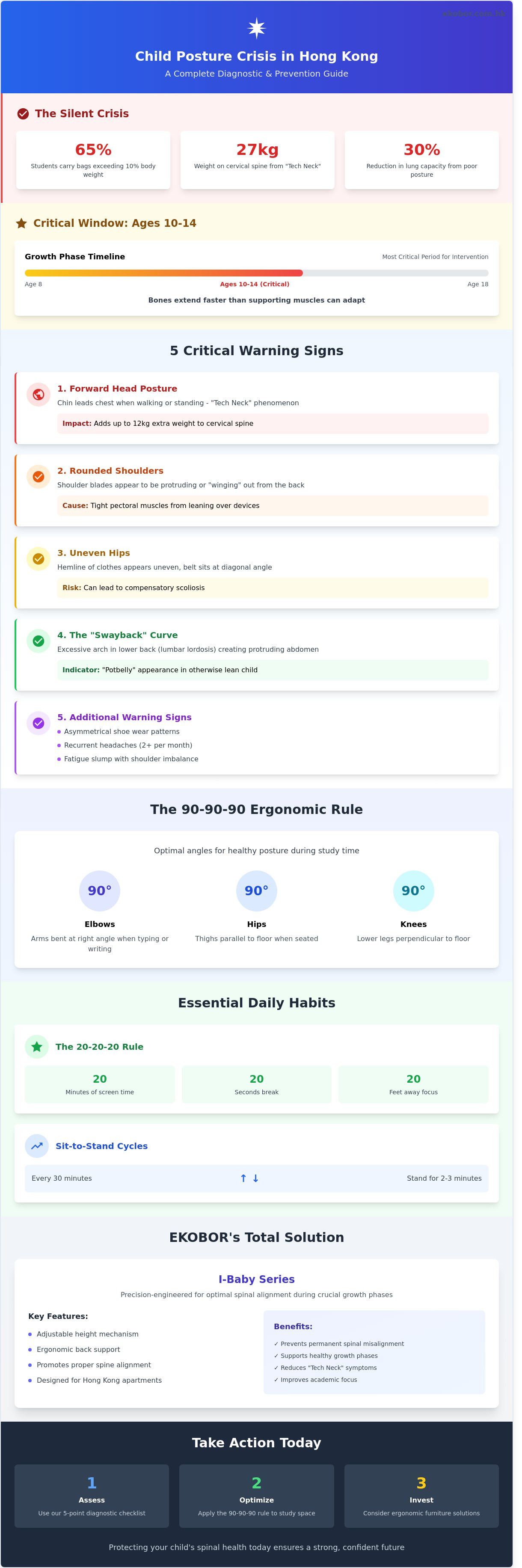
The Diagnostic Checklist: 5 Signs Your Child Needs Posture Correction
Use this simple checklist to assess your child's posture. If you notice one or more of these signs consistently, it’s time to take proactive steps.
- Forward Head Posture: When viewed from the side, do their earlobes sit significantly in front of their shoulders? Does their chin jut forward when they walk or look at a screen?
- Rounded Shoulders: Are their shoulders slumped forward, creating a hunched appearance? When viewed from the back, do their shoulder blades appear to "wing" out?
- Uneven Hips or Shoulders: When they stand straight, does one shoulder or hip appear higher than the other? You might also notice that one pant leg consistently seems longer.
- The "Swayback" Curve (Lordosis): Is there a pronounced inward curve in their lower back, causing their stomach and bottom to stick out? This often indicates weak core muscles.
- Frequent Fidgeting and Discomfort: While a child's natural energy is a factor, an inability to sit comfortably for more than 10-15 minutes during homework can be a sign that their chair and desk are causing physical strain.
The "Wall Test" for Quick Assessment
For a simple, 30-second check at home, have your child stand with their back against a flat wall. Their heels should be a few inches from the wall.
Research published by posture correction tips for children shows that this is a well-documented area of ongoing research and practical application.
- What to Look For: The back of their head, their shoulder blades, and their buttocks should all touch the wall. You should be able to slide a flat hand, but not much more, into the space behind their lower back.
- Red Flags: If their head cannot touch the wall without tilting their chin up, it indicates forward head posture. A large gap behind the lower back suggests a swayback.
- Next Steps: While this test is a useful guide, if you have significant concerns, it's always best to seek a professional consultation.
Psychological and Energy Indicators
Poor posture doesn't just affect the body; it impacts energy and focus. A slumped posture can restrict breathing, reducing oxygen flow and leading to faster fatigue during long study sessions. This physical strain makes it harder to concentrate on complex tasks, potentially affecting academic performance. Furthermore, a slumped, closed-off posture can even impact a child's mood and confidence over time.
The Environmental Audit: An Ergonomic Furniture Checklist
Correcting posture is less about fixing the child and more about fixing their environment. In space-conscious Hong Kong apartments, investing in adaptable, ergonomic furniture is the most effective long-term strategy. It moves you from a reactive to a proactive approach.
- The 90-90-90 Rule: This is the ergonomic gold standard. When seated, your child's elbows, hips, and knees should all form approximate 90-degree angles, with their feet flat on the floor or a footrest.
- Height-Adjustable Desks: For a growing child, a fixed-height desk is only the "right" height for a few months. A height-adjustable desk is a non-negotiable tool for maintaining proper ergonomics through every growth spurt.
- Chairs for "Active Sitting": The best ergonomic chairs don't just provide static support; they encourage micro-movements. This "active sitting" engages core muscles and prevents the stiffness that comes from holding one position for too long.
The Height-Adjustable Desk Requirement
A desk that "grows" with your child is one of the smartest investments a parent can make. Instead of buying a new desk every few years, a single high-quality adjustable desk can see them from primary school through to their DSE exams. This not only ensures perfect ergonomic alignment year after year but also represents a more sustainable and space-efficient solution for Hong Kong homes. Electric adjustment models offer the most convenience, allowing for precise changes with the touch of a button.
Chair Selection for Spinal Support
The right chair provides dynamic support. Look for adjustable seat depth to ensure proper thigh support and a robust lumbar curve to protect the lower back. For younger children, an adjustable footrest is essential to achieve the 90-90-90 rule if their feet don't reach the floor. Chairs like the HAG Capisco Puls are ideal as they allow for multiple seating positions, supporting a child's natural need to move. In Hong Kong's humid climate, material choice is key; a breathable mesh back can provide significantly more comfort during long, sticky summer study sessions than a standard fabric chair. When considering options, it's helpful to understand the differences when choosing the right high-performance ergonomic chair for long-term use.
Daily Habit Checklist: Proactive Movement for Healthy Spines
Ergonomic furniture is the foundation, but healthy habits are what bring it to life. Integrate these simple routines into your child's day to build lifelong postural awareness.
- The "20-20-20" Rule: Every 20 minutes, encourage your child to look at something 20 feet away for 20 seconds. Use this micro-break to also stand up, stretch their arms overhead, and reset their posture.
- Incorporate "Sit-to-Stand" Cycles: Break up long homework sessions by alternating between sitting and standing. This is one of the most powerful ways to combat a sedentary study routine.
- Perform "Reverse" Stretches: After school, have them perform simple stretches that counteract the "C-shape" slouch, such as clasping their hands behind their back and gently squeezing their shoulder blades together.
- Optimise Lighting: Ensure their study area is well-lit. Poor lighting causes children to lean forward and hunch over their work, directly contributing to Tech Neck.
Implementing the Sit-to-Stand Culture at Home
Using a height-adjustable desk isn't just about finding the perfect sitting height; it's about unlocking the ability to stand. Use a simple timer to remind your child to switch positions every 30-45 minutes. Tasks like reading or reviewing notes are easily done while standing, which re-engages different muscle groups and improves blood flow. This dynamic approach transforms study from a passive, static activity into an active, healthier one. To learn more about the benefits, explore our ultimate guide to choosing a standing desk.
The Small Space Study Solution
Creating an ergonomic setup in a compact Hong Kong apartment is entirely possible with smart planning. Optimise corner spaces, which are often underutilised. A crucial tool is a monitor arm, which clamps to the back of the desk. This lifts the screen off the desk surface, freeing up valuable workspace and allowing you to position the monitor at the perfect eye level, preventing your child from hunching over. For more ideas on building the ideal workspace, see our guide on optimising your setup for health and productivity.
EKOBOR’s Total Solution for Child Posture in Hong Kong
Since 2010, EKOBOR has been the trusted partner for Hong Kong families seeking to invest in their long-term health and wellness. We understand the unique pressures and spatial constraints of city living. Our approach is not just to sell furniture, but to provide a "Total Solution" that integrates precision-engineered products with expert advice. This investment in a proper ergonomic study space yields a significant return: improved health, better focus, and the peace of mind that you are providing the best possible support for your child's development.
The I-Baby Advantage
Our I-Baby series of height-adjustable desks and chairs is engineered specifically for the needs of growing children. With technical specifications that support healthy development from age 5 to 18, these systems are built to last. They feature child-specific safety features, durable materials that withstand daily use, and a seamless adjustment mechanism that makes it easy for parents to maintain a perfect ergonomic fit as their child grows. This "Total Solution" simplifies the challenge of creating a healthy study environment.
Experience the Difference in Person
We believe that you cannot choose the right ergonomic solution from a picture online. A "10-minute chair test" is essential to feel the difference that proper support makes. We invite you and your child to visit our showrooms in Causeway Bay or Kowloon Bay. Our health-conscious wellness consultants can provide a professional posture and workspace assessment, helping you find the perfect fit for your child's needs and your home's space. Take the first step towards a healthier future for your child today.
Frequently Asked Questions (FAQs)
- Can a posture corrector brace actually fix my child’s slouching?
- Posture braces can provide temporary support and act as a reminder, but they don't address the root cause. They can weaken core muscles over time if relied upon too heavily. The sustainable solution is building muscle strength and creating an ergonomic environment that encourages good posture naturally.
- What is the best age to start using an ergonomic desk for my child?
- The best time to start is as soon as your child begins spending regular time at a desk for homework or creative activities, typically around age 5 or 6. Starting early helps establish healthy habits before poor postural patterns can set in.
- How often should I adjust the height of my child’s desk and chair?
- During growth spurts, you may need to check the fit every 3-4 months. A good rule of thumb is to perform a quick "90-90-90" check at the beginning of each school term and adjust as needed.
- Does my child really need a standing desk for homework?
- While not strictly necessary, a height-adjustable desk that allows for standing is one of the most powerful tools to combat the negative effects of a sedentary lifestyle. It encourages movement, improves circulation, and can even boost focus during long study periods.
- What are the most common posture problems for students in Hong Kong?
- The most prevalent issues are Forward Head Posture ("Tech Neck") from screen use, rounded shoulders from carrying heavy school bags, and lower back pain caused by sitting for long hours in ill-fitting, non-ergonomic chairs.
- How can I encourage my child to sit properly without constant nagging?
- The key is to make the correct posture the easiest and most comfortable option. An ergonomic chair and desk set to the right height will naturally support an upright spine. Leading by example with your own posture also has a powerful influence.
- Are ergonomic chairs worth the investment for a 7-year-old?
- Absolutely. Investing in a high-quality, adjustable ergonomic chair at a young age is an investment in their long-term spinal health. A good chair will adapt as they grow, providing proper support for a decade or more, making it more cost-effective than replacing cheaper chairs every few years.
- What should I look for in a kids height-adjustable desk for a small flat?
- For a small Hong Kong flat, prioritise a desk with a compact footprint, a quiet and smooth electric adjustment mechanism, and robust build quality. Look for models with built-in safety features to prevent pinching and ensure stability.


