



The Parent’s Checklist for Child Posture Correction in Hong Kong (2026)
In Hong Kong's demanding academic landscape, parents are increasingly concerned about their children's long-term health. This comprehensive, parent-focused checklist is designed to help you identify postural issues early and create a health-first study environment that supports your growing child, protecting them from the silent crisis of poor posture before it becomes a lifelong problem.
The Silent Crisis: Why Child Posture Correction is Vital in 2026
Child posture correction is far more than just telling your child to "sit up straight." It's a holistic approach to ensuring proper spinal alignment during their most critical growth phases. In the unique context of Hong Kong, where competitive schooling, gruelling tutorial schedules, and early digital literacy are the norm, young bodies are under unprecedented strain. The long-term cost of neglecting poor posture can range from chronic back pain and frequent headaches to reduced lung capacity and diminished concentration. The "growth spurt" window is the most critical time for intervention, setting the foundation for a healthy adult life.
According to good posture, this is a well-documented area of ongoing research and practical application.
The Impact of the "HK Student Lifestyle"
- Heavy School Bags: The sheer weight of textbooks and materials in a typical Hong Kong school bag forces a child's body to compensate, often by leaning forward. This directly strains the neck and back, leading to rounded shoulders and an imbalanced gait.
- The "Tech Neck" Epidemic: From doing homework on an iPad to gaming on a phone during the MTR ride home, children spend hours with their heads tilted downwards. This creates "Tech Neck," a repetitive strain injury that pulls the entire spine out of alignment.
- Inadequate Furniture: Traditional, fixed-height desks and chairs are a significant problem. They cannot adapt to a child's rapid growth, forcing them into awkward, slumped positions for hours of study each day, which is especially damaging in a city where long homework sessions are common.
Early Warning Signs Parents Often Miss
- The "Tired" Stance: Observe your child’s natural standing position when they are tired or off-guard. Do they instinctively slump, push their hips forward, or lean heavily to one side? This is their body's default alignment.
- Uneven Shoe Wear: Check the soles of their most-worn shoes. Is one side, particularly the heel, more worn down than the other? This can be a clear indicator of an imbalanced gait or pelvic misalignment.
- Headaches and Neck Pain: If your child complains of frequent headaches, especially at the end of the school day, don't dismiss it as simple fatigue. There is a strong correlation between chronic headaches and the strain caused by poor neck posture.
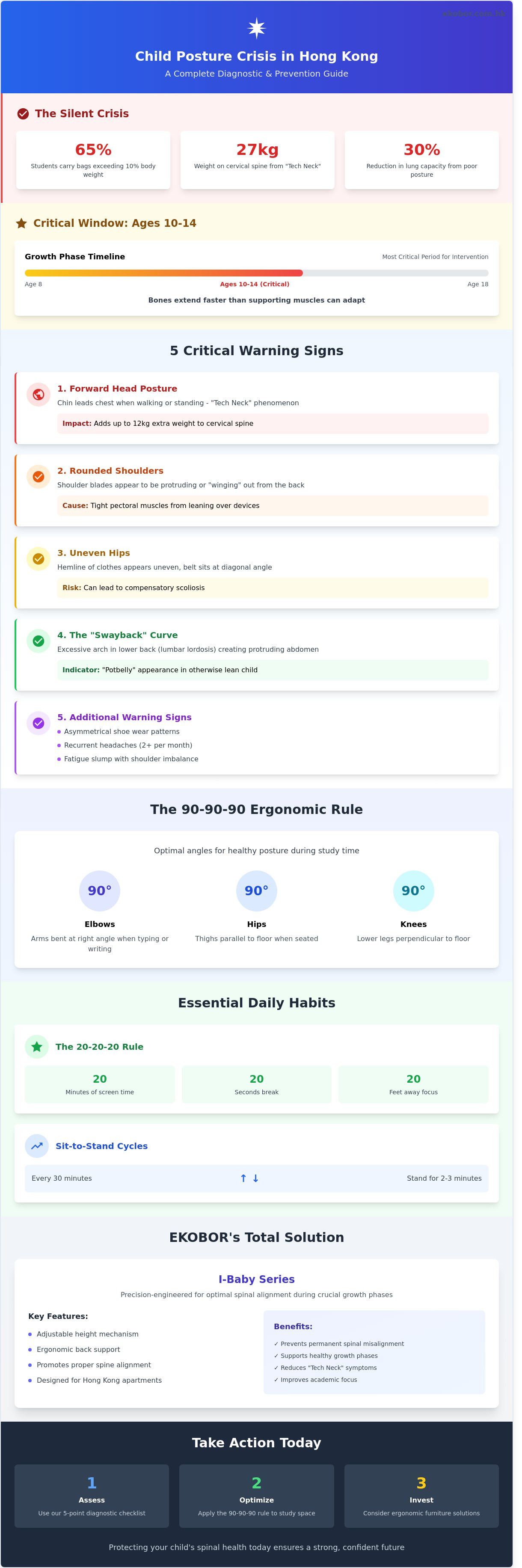
The Diagnostic Checklist: 5 Signs Your Child Needs Posture Correction
In the non-stop pace of Hong Kong life, it's easy to overlook subtle physical changes. This diagnostic checklist helps you cut through the noise and focus on key indicators of developing postural problems.
- Forward Head Posture: When your child walks or stands, does their ear align with their shoulder, or is it significantly in front? A forward-leading chin is a classic sign of neck and upper back strain.
- Rounded Shoulders: Look at your child from the side and back. Are their shoulders slumped forward, creating a C-shape in their upper back? You may also notice their shoulder blades "winging" out instead of lying flat.
- Uneven Hips or Shoulders: Have your child stand straight and look at their reflection in a mirror. Is one shoulder or hip noticeably higher than the other? This could suggest a spinal curve or pelvic tilt.
- The "Swayback" Curve: An excessive inward curve in the lower back, often accompanied by a protruding stomach, is known as swayback or hyperlordosis. It places significant stress on the lumbar spine.
- Frequent Fidgeting: While some fidgeting is normal, an inability to sit comfortably for more than 10-15 minutes can be a sign that their body is in discomfort. They may be subconsciously trying to relieve pressure caused by an unsupportive chair or desk.
The "Wall Test" for Quick Assessment
Perform this simple, 30-second check at home to gauge spinal alignment. Have your child stand with their back against a flat wall, heels about 2-4 inches away from the wall. Their head, shoulder blades, and buttocks should all touch the wall. You should be able to slide a flat hand—but not much more—between the wall and their lower back. If there's a large gap or their head cannot touch the wall comfortably, it indicates a potential posture issue that may warrant a professional consultation.
Research published by expert advice on child posture and scoliosis shows that this is a well-documented area of ongoing research and practical application.
Psychological and Energy Indicators
Poor posture isn't just a physical issue; it directly impacts a child's energy and focus. The constant muscular effort required to hold a slumped position can lead to rapid fatigue during homework. This physical drain is often linked to a decline in academic concentration. Furthermore, a "slumped" physical posture can negatively affect mood and confidence, creating a cycle of low energy and disengagement.
The Environmental Audit: An Ergonomic Furniture Checklist
In compact Hong Kong apartments where the dining table often doubles as a study desk, creating an ergonomic environment is challenging but essential. The goal is to move beyond "one-size-fits-all" furniture and create a space that actively supports a healthy posture.
- The 90-90-90 Rule: This is the gold standard for ergonomic sitting. Your child's elbows, hips, and knees should all be at roughly 90-degree angles, with their feet flat on the floor or a footrest.
- Height-Adjustable Desks: For a growing child, a height-adjustable desk is a non-negotiable investment. It ensures the desk surface can always be perfectly aligned to their elbow height, preventing hunching.
- Active Sitting Chairs: The best ergonomic chairs don't just provide static support; they encourage micro-movements. This "active sitting" engages core muscles and prevents the body from settling into a harmful slump.
The Height-Adjustable Desk Requirement
A child can grow several centimetres in just a few months. A desk that "grows" with them is the only way to ensure a perfect ergonomic fit year after year. This makes a height-adjustable desk one of the smartest long-term investments for your child's health, saving you from buying multiple desks as they grow. The I-Baby Kids Height Adjustable Desk is engineered specifically for this purpose, providing a stable, adaptable surface that supports them from primary school through their secondary years.
Research published by understanding childhood kyphosis shows that this is a well-documented area of ongoing research and practical application.
Chair Selection for Spinal Support
A good ergonomic chair for a child needs adjustable seat depth to support their thighs and a stable footrest if their feet don't reach the floor. In Hong Kong's humid climate, material choice is also key; breathable mesh can provide comfort, while high-quality supportive fabric offers durability. Chairs like the HAG Capisco Puls are ideal as they allow for multiple seating positions, encouraging the active sitting that is vital for focus and physical well-being. To better understand your options, it's helpful to see how leading ergonomic chairs compare in terms of features and long-term benefits.
Daily Habit Checklist: Proactive Movement for Healthy Spines
Ergonomic furniture is the foundation, but daily habits are what solidify a lifetime of good posture. Building these routines into a demanding Hong Kong schedule is key to proactive spinal health.
- The "20-20-20" Rule: Encourage your child to take a break every 20 minutes, look at something 20 feet away, for at least 20 seconds. This not only rests their eyes but also provides a perfect cue to stand up and stretch.
- Sit-to-Stand Cycles: Integrate standing periods into their study routine. Standing to read a chapter before sitting to write an essay can dramatically reduce the strain of prolonged sitting.
- "C-Shape" Reversal Stretches: Teach them simple stretches like reaching their arms up and back or gently arching their upper back over the back of their chair to reverse the forward slump from school.
- Proper Lighting: Ensure their study area is well-lit. Dim lighting causes a child to lean forward and hunch over their work, directly contributing to poor neck and back posture.
Implementing the Sit-to-Stand Culture at Home
Transform study time from a static activity into a dynamic one. Use a simple timer to remind your child to switch from sitting to standing every 30-40 minutes. This simple habit improves circulation, engages different muscle groups, and keeps energy levels high. If you're considering this for your home, our guide to choosing a standing desk in Hong Kong provides valuable insights tailored to local needs.
The Small Space Study Solution
Even in a compact Hong Kong flat, you can create a dedicated ergonomic zone. Optimise a corner space with a compact height-adjustable desk. Use monitor arms to lift screens to the correct eye level, which frees up valuable desk surface and prevents slouching. By carefully selecting multi-functional pieces, you can create a highly effective study area without sacrificing living space. Learning how to create the best layout is crucial, and optimising your setup for health and productivity can make a significant difference.
EKOBOR’s Total Solution for Child Posture in Hong Kong
As a Hong Kong family-owned business since 2010, EKOBOR understands the unique pressures faced by students and parents in this city. We are not just furniture retailers; we are partners in your family's long-term wellness. The science behind our I-Baby series is based on precision engineering to support children through every growth spurt. We invite you to our showrooms in Causeway Bay and Kowloon Bay for a professional posture consultation, where we can help you design an ergonomic study space that delivers a powerful return on investment for your child's health and academic success.
The I-Baby Advantage
Our I-Baby series is designed with technical specifications that support healthy development from age 5 to 18. With robust safety features like anti-pinch sensors and durable, child-friendly materials, our desks provide peace of mind. Our "Total Solution" approach means we help you pair the right desk with the right chair and accessories, simplifying the process for busy parents.
Experience the Difference in Person
You wouldn't buy shoes without trying them on, and the same is true for an ergonomic chair. A "10-minute chair test" in our showroom is essential to feel the difference that proper support makes. Our health-conscious wellness consultants can provide expert advice tailored to your child's needs and your home's spatial constraints. Investing in your child's wellness is more accessible than you may think; we invite you to view our current promotions on ergonomic solutions.


