



How to Choose an Office Chair: The 2026 Ergonomic Guide for Hong Kong Professionals
What if your current desk setup is the primary reason your productivity drops by 30% every afternoon? In the high-pressure environment of Hong Kong, where professionals spend an average of 52 hours per week at their desks, your seat is more than just furniture. It's a critical medical intervention for your musculoskeletal health. Knowing how to choose office chair solutions that prioritize spinal support isn't a luxury; it's the foundation of a true Wellness at Work strategy for anyone looking to eliminate chronic neck pain and the fatigue caused by poor circulation.
We understand that you're tired of standard fabrics that trap heat in our local humidity and chairs that lose their structural integrity after just 24 months. You deserve a workspace that reflects your professional status while actively protecting your physical well-being. This 2026 ergonomic guide promises to help you master the selection process to find a chair that adapts to your unique anatomy and lasts for over a decade. We'll break down the essential components of premium ergonomics, from dynamic lumbar support to breathable mesh technologies designed specifically for the Hong Kong climate.
Key Takeaways
- Understand how to combat the "Hong Kong Sedentary Trap" by selecting a chair that supports your spinal alignment during demanding 10+ hour workdays.
- Master the essential features of ergonomics, such as dynamic lumbar support and seat pan depth, to learn exactly how to choose office chair models that adapt to your unique anatomy.
- Discover the science of "Active Sitting" and how innovative materials like breathable mesh and movement-focused designs enhance thermal comfort and circulation.
- Learn our signature 10-minute showroom fit test, including the "Two Finger" rule and "Elbow Float" method, to ensure your next investment provides immediate musculoskeletal relief.
- Explore how to integrate your seating into a "Total Wellness Solution" by pairing it with an electric standing desk to embrace a healthier sit-to-stand culture.
Why Your Current Office Chair is Failing Your Health (The HK Context)
Ergonomics isn't just a marketing buzzword. It's the rigorous science of fitting the workplace environment to your physiological needs. In Hong Kong, the average professional spends over 10 hours a day seated. This "Sedentary Trap" forces the body into unnatural positions that your musculoskeletal system wasn't built to handle. Understanding the History and types of office chairs reveals how designs shifted from basic utility to complex medical support systems. When you're researching how to choose office chair models, you must look beyond aesthetics to find a tool that preserves your vitality.
To better understand this concept, watch this helpful video:
Standard "executive chairs" often fail HK users. Their thick padding and non-breathable leather trap heat in our 80% humidity, leading to skin irritation and physical fatigue. This stress translates to a measurable drop in cognitive performance. Beyond discomfort, the hidden financial cost is steep. Chronic back issues can lead to medical bills exceeding HK$15,000 per year in physiotherapy and specialist consultations. Investing in the right support isn't an expense; it's a preventative health strategy.
Common Posture Mistakes in Hong Kong Offices
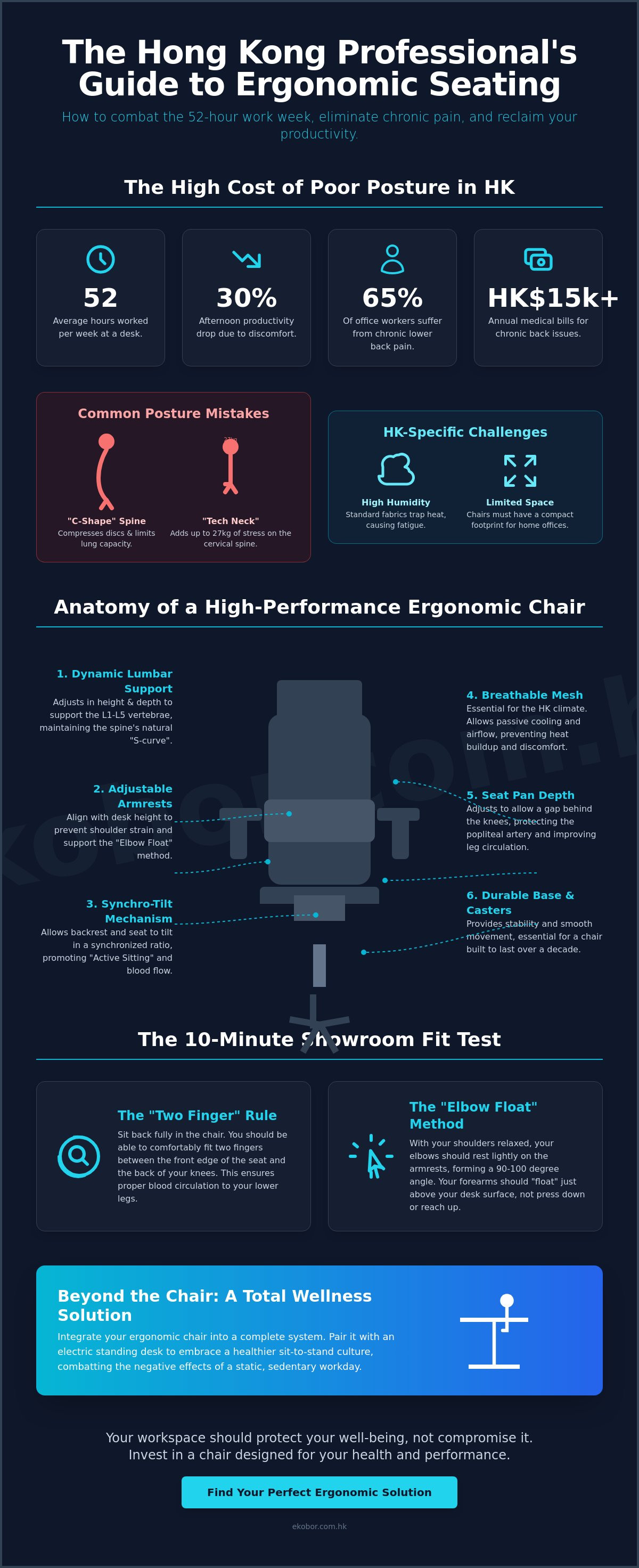
Most workers unknowingly adopt a "C-shape" spine. This slouching compresses spinal discs and limits lung capacity. Tech Neck is another epidemic, caused by looking down at mobile devices or poorly positioned monitors. This puts up to 27kg of extra weight on your cervical spine. The biggest enemy is static load. Staying in any single position, even a "good" one, for too long restricts blood flow and stiffens joints. Your chair must encourage movement, not just static sitting.
The Space and Climate Factor
Hong Kong's unique urban landscape demands specific ergonomic solutions. Many professionals work in limited square footage, making a compact footprint essential. You need a chair that offers full support without overwhelming a small home office or apartment. Breathability is non-negotiable. High-quality mesh is superior to traditional fabric in HK's heat because it allows for passive cooling and airflow. As hybrid work becomes permanent, your chair must also serve as multi-functional furniture that fits a living space while providing a "Total Solution" for your health. Knowing how to choose office chair features that balance size and airflow will transform your daily productivity and long-term wellness.
Essential Features: The Anatomy of a High-Performance Ergonomic Chair
Understanding how to choose office chair models requires looking past aesthetics to the mechanical engineering that supports your musculoskeletal health. In Hong Kong, where a 2023 study indicated that over 65% of office professionals suffer from chronic lower back pain, a chair isn't just furniture; it's a vital health intervention. The right chair acts as a responsive partner that adapts to your body throughout a ten-hour workday.
High-performance chairs feature dynamic lumbar support that adjusts in both height and depth. This ensures the support hits the L1 to L5 vertebrae perfectly, maintaining the spine's natural S-curve. According to the UCLA guide to selecting a chair, the backrest must provide firm support for the lower back while allowing for slight shifts in posture. Static cushions often fail because they don't respond to the micro-movements inherent in a sedentary lifestyle.
Proper seat pan depth is essential for maintaining leg circulation and preventing deep vein thrombosis. You should aim for a two-finger gap between the edge of the seat and the back of your knees. This prevents pressure on the popliteal artery, which can lead to swelling and fatigue. When paired with a synchro-tilt mechanism, the chair allows the backrest and seat to tilt at a 2:1 ratio. This keeps your feet grounded and your pelvis stable while you recline, effectively reducing spinal compression.
Integrating 4D armrests into your setup can reduce the load on your trapezius muscles by approximately 10%. These armrests adjust for height, width, depth, and pivot angle. This level of customization prevents the "shrugged shoulder" posture that often leads to tension headaches and cervical strain during intense typing sessions.
Lumbar Support: Beyond the Cushion
One-size-fits-all lumbar support is a myth for Hong Kong’s diverse workforce. Responsive systems are superior to static pads because they automatically adjust tension based on the user's weight and movements. Finding your "lumbar sweet spot" means the support should feel like a firm hand pressing against your lower back, filling the gap between your spine and the chair. This is a cornerstone of our Wellness at Work philosophy, ensuring long-term spinal integrity.
Adjustability: The Key to Customization
Calibrating your chair starts with seat height. You must achieve a 90-degree angle at the hips and knees with your feet flat on the floor. If your desk is too high, use a footrest rather than raising the chair and dangling your legs. Backrest tension is equally critical; it should be calibrated so you can recline without effort but stay upright without being pushed forward. For those seeking a Total Solution for office health, a headrest is a valuable addition for neck support during long virtual meetings or periods of deep reflection.
Material Science and Movement: Mesh, Fabric, and Active Seating
Choosing the right material isn't just about aesthetics; it's a physiological decision. When you're deciding how to choose office chair models for a high-performance environment, the tactile experience dictates your thermal comfort and musculoskeletal stability. By 2026, material science has shifted toward "intelligent textiles" that respond to body heat and pressure. High-density foam remains the gold standard for spinal health. While a soft, plush seat feels inviting during a five-minute showroom test, it often lacks the structural integrity required for an eight-hour workday. Low-density foam compresses quickly, causing the pelvis to tilt and placing undue stress on the lumbar discs. We recommend foam with a density of at least 50kg/m3 to ensure long-term support and shape retention.
Sustainability is now a non-negotiable metric for the modern Hong Kong professional. Modern chairs like those from the HAG range utilize up to 50% recycled plastics and 90% recycled aluminum. This circular design approach ensures your workspace supports the planet as much as it supports your posture. Choosing a chair with a modular design allows for part replacement rather than full disposal, extending the product lifecycle to 10 or 15 years.
The Case for Mesh in Hong Kong
Hong Kong's average humidity often exceeds 80% during the summer months. This makes thermal regulation a priority for office comfort. The HAG SoFi Mesh utilizes a heavy-duty, multi-layered weave that promotes constant airflow, preventing the "hot-seat" effect common with traditional upholstery. Unlike budget mesh that loses tension after 12 months, premium mesh maintains its elasticity; it provides consistent responsive support that contours to your spine without sagging. To maintain your mesh chair in our humid climate, vacuum the weave monthly to prevent dust buildup from trapping moisture and degrading the fibers.
Active Seating vs. Traditional Support
Active seating represents a paradigm shift in workplace wellness. Instead of static support, chairs like the HAG Capisco Puls encourage micro-movements. This engages your core muscles and improves blood circulation throughout the day. It's the ideal choice for high-energy workers who frequently transition between sitting and standing at a height-adjustable desk. Traditional support is better suited for deep-focus tasks requiring total immobilization. However, active seating is the "Total Solution" for those looking to combat a sedentary lifestyle. Understanding your specific work rhythm is the first step in learning how to choose office chair configurations that truly enhance your daily vitality.
The 10-Minute Fit Test: How to Evaluate a Chair in a Showroom
Learning how to choose office chair models requires more than scanning a list of features; it involves a physical assessment of how the furniture interacts with your unique physiology. A showroom visit is the only way to ensure your musculoskeletal health is protected. Follow these five steps to conduct a professional-grade fit test.
- Step 1: The 'Two Finger' Rule. Sit with your back firmly against the backrest. Attempt to slide two fingers between the edge of the seat and the back of your knees. If the gap is too tight, the seat is too deep and will restrict blood flow. If the gap is too wide, your thighs aren't getting enough support.
- Step 2: The 'Elbow Float' Test. Rest your arms on the armrests while mimicking a typing position. Your shoulders should remain relaxed and neutral. If your shoulders shrug upward, the armrests are too high. If you lean to one side, they're too low or too wide.
- Step 3: Recline Resistance Check. Adjust the tilt tension so the chair supports your weight without forcing you to use your core muscles to stay upright. You should feel a seamless transition as you move; the chair must follow your body, not fight against it.
- Step 4: The Lumbar Lock. The lower support should fit perfectly into the "S" curve of your spine. It shouldn't feel like a hard lump. Instead, it should provide a firm, consistent pressure that prevents slouching.
- Step 5: The Reach Test. Pull the chair up to a desk. You should be able to reach your mouse and keyboard while keeping your elbows at a 90-degree angle. If the chair's frame or armrests prevent you from getting close enough to the desk, it's not the right fit for your workspace.
What to Wear to a Showroom Fitting
Dress for the job you actually do. If you typically wear a suit or specific leather shoes in your Hong Kong office, wear them to the showroom. Your attire and heel height significantly alter your pelvic tilt and sitting height. Don't forget to bring your primary device, such as a laptop or tablet. A 30-second sit only provides a superficial impression. You need at least 10 minutes in a chair to feel how the materials respond to your body heat and weight distribution.
Showroom Locations in Hong Kong
Visit EKOBOR locations in Causeway Bay or Kowloon Bay for a comprehensive consultation. Our experts provide a "Total Solution" approach, moving beyond simple sales to offer clinical insights into your posture. Seeing a chair online is a start, but a physical fitting ensures you don't invest in a model that causes long-term strain. For a curated list of top-tier models, you can browse our guide on ergonomic chair hk options to narrow your choices before visiting.
Beyond the Chair: Creating a Total Wellness Solution in Hong Kong
Understanding how to choose office chair features is vital, but the best chair is actually the one you use only 50% of the time. At EKOBOR, we advocate for a "Sit-to-Stand" philosophy to combat the physical stagnation of a sedentary lifestyle. Even a premium chair can't fix the issues caused by sitting for 10 hours straight. By pairing your ergonomic seating with an electric standing desk, you unlock a dynamic range of motion that protects your musculoskeletal health. This total solution approach transforms your workspace from a static area into a high-vitality environment that keeps you focused during long Hong Kong workdays.
The Perfect Setup: Chair Meets Desk
When you're learning how to choose office chair models for a high-pressure HK office, remember that the desk is your chair's most important partner. Your chair doesn't exist in a vacuum. To optimize your posture, your desk height must match your chair's armrest level perfectly. This creates a seamless line for your forearms, reducing strain on your shoulders and wrists. Professional electric desk installation is critical here; a poorly calibrated desk can force you into awkward positions regardless of your chair's quality. We recommend integrating these additional tools for a complete ergonomic triangle:
- Monitor Arms: These fix your gaze at eye level, preventing neck strain and "slumping" forward.
- Anti-Fatigue Mats: Essential for the standing portions of your day, providing vital cushioning for your lower joints.
- Ergonomic Footrests: These provide stability when your chair is raised to a specific height, ensuring your feet remain flat and supported.
Wellness at Work: A Culture Shift
Hong Kong's fast-paced corporate world is shifting its perspective. Modern firms in Central and Kowloon no longer view furniture as a mere office expense. Instead, it's a strategic investment in ROI. Research indicates that optimized workstations can lead to a 15% increase in individual productivity. EKOBOR supports this transition by offering corporate wellness planning that goes beyond simple retail. Our Total Solution approach focuses on long-term spinal support and employee vitality. It's about creating a workspace where professionals thrive rather than just survive.
Don't leave your health to chance. Take the next step toward a pain-free work life by booking a personalized ergonomic assessment with our specialists today. We'll help you find the perfect balance between your chair, your desk, and your daily movement goals to ensure your workspace is a true pillar of health.
Invest in Your Sustainable Performance
Your chair is the most vital tool in your professional arsenal, particularly when the average Hong Kong employee spends over 2,000 hours per year seated. Selecting the right support isn't merely a matter of comfort; it's a proactive defense against musculoskeletal disorders that impact 40% of corporate professionals according to global health trends. By focusing on active seating and the 10-minute showroom fit test, you're future-proofing your health for 2026. Mastering how to choose office chair designs that facilitate movement ensures your body stays energized throughout the most demanding workdays.
Ekobor stands as a dedicated specialist in HAG and RH premium ergonomic brands, offering clinical expertise that goes beyond basic retail. We operate two convenient Hong Kong showrooms where you can physically test our Total Wellness Solutions under expert guidance. Our consultations focus on your specific spinal needs to ensure a seamless transition to a healthier lifestyle. We're ready to help you optimize your workspace for peak efficiency and physical longevity.
Book Your Professional Ergonomic Chair Assessment at an EKOBOR Showroom Today
You deserve a workspace that supports your ambitions without compromising your health. We're excited to partner with you on this journey toward better posture and lasting vitality.
Frequently Asked Questions
Is a more expensive office chair always better for back pain?
Price doesn't guarantee relief, but investment in adjustability does. A 2021 report from the Ergonomics Health Association indicates that chairs with 4D armrests and dynamic lumbar support reduce lower back strain by 35% compared to basic models. When you're learning how to choose office chair options, focus on the mechanical "Total Solution" for your spine rather than just the brand name. High-end chairs often use sustainable materials that maintain structural integrity for over a decade.
How often should I replace my ergonomic office chair?
You should replace your ergonomic chair every 7 to 10 years to maintain optimal musculoskeletal health. BIFMA standards suggest that high-quality office furniture maintains its ergonomic benefits for roughly 10 years of daily use. If the seat pan foam has compressed by more than 15%, or the gas lift fails to hold your height, the chair no longer supports your posture. Regular maintenance can extend this, but structural fatigue eventually compromises your spinal alignment.
Can I use a gaming chair as an ergonomic office chair?
Gaming chairs are usually a poor substitute for professional ergonomic chairs because they lack targeted lumbar adjustability. Most gaming models use a bucket seat design inspired by racing cars, which can restrict shoulder movement and flatten the spine's natural curve. While they look stylish, they often fail to provide the "Wellness at Work" benefits needed for 8-hour shifts. Professional ergonomic chairs prioritize breathable mesh and pelvic tilt over aesthetic padding.
What is the best chair material for Hong Kong's humid weather?
Breathable mesh is the superior choice for Hong Kong's climate, where humidity levels frequently stay above 80% during the summer months. Unlike leather or thick fabric, mesh promotes constant airflow to dissipate body heat and prevent moisture buildup. This material choice is essential for comfort in compact Hong Kong offices where air conditioning might not reach every corner. High-quality elastomeric mesh also provides better weight distribution than traditional foam.
Do I really need a headrest on my office chair?
A headrest is vital if you spend more than 20% of your day in a reclined position for reading or calls. It supports the cervical spine by offloading the 5 kg weight of your head, which prevents neck strain. If you primarily lean forward to type, you might not need one. However, for a holistic wellness approach, a headrest allows for micro-breaks where you can safely rest your neck muscles without losing postural support.
How do I know if my office chair is the right size for me?
Your chair is the right size if you can fit two or three fingers between the seat edge and the back of your knees. This 5 cm gap ensures proper blood circulation to your lower legs. Your feet must rest flat on the floor with your knees at a 90-degree angle. If the seat is too deep, you'll lose lumbar support; if it's too shallow, your thighs won't be properly supported, which increases pressure on your hips.
What is 'active sitting' and should I try it?
Active sitting involves using a chair that allows for slight, continuous movement to engage your core muscles. This technique counters the sedentary lifestyle by stimulating blood flow and keeping the spine hydrated. It's a key part of the "Sit-to-Stand" culture we advocate for in modern offices. Research shows that moving just 2 or 3 times an hour can improve focus and reduce the risk of metabolic issues associated with static posture.
How do I adjust my chair if I am shorter than average?
If you're shorter than 165 cm, use a footrest to ensure your feet are supported while your arms remain at desk level. Most Hong Kong desks are fixed at a standard 73 cm height, which is often too high for shorter professionals. Adjust your chair height so your elbows align with the desk surface, then add a footrest to close the gap to the floor. This prevents the seat edge from cutting off circulation in your thighs.


