



Acoustic Desk Dividers: The 2026 Guide to Noise Reduction in Hong Kong Offices
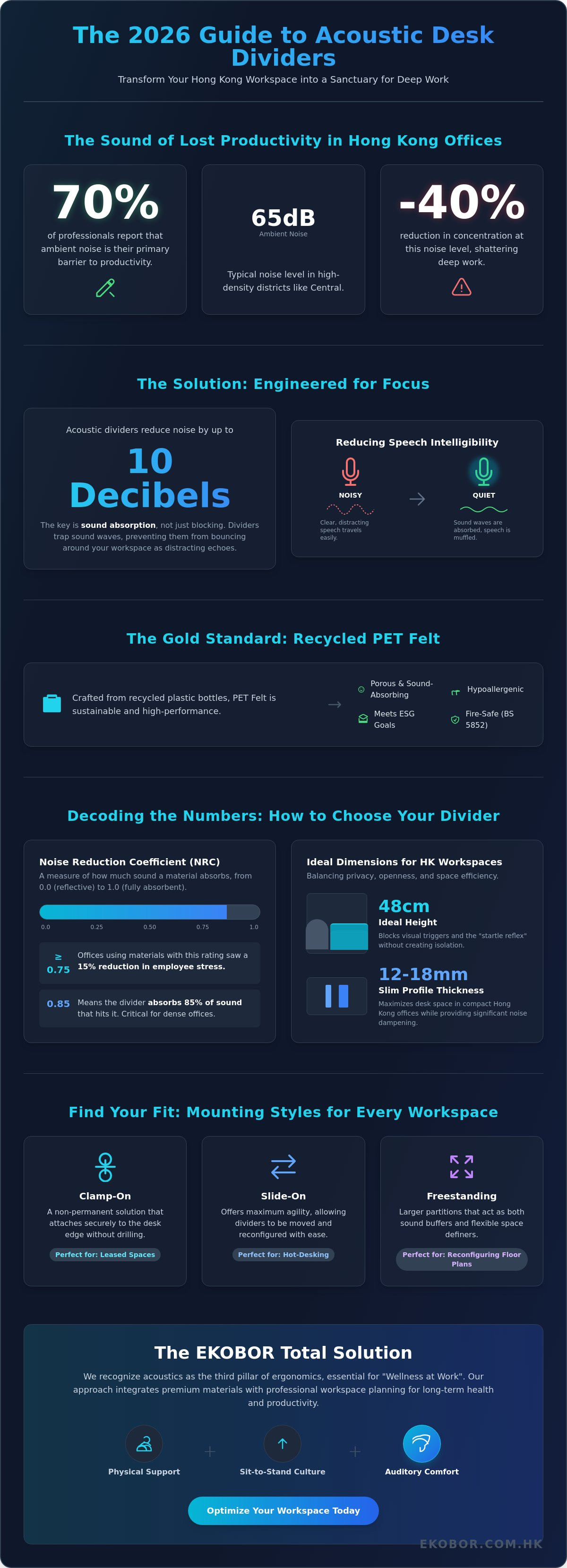
Did you know that 70% of professionals in Hong Kong's dense business districts report that ambient noise is the primary barrier to their daily productivity? It’s a struggle we all recognize. When you’re working in a compact Central or Quarry Bay office, the constant hum of a colleague’s Zoom call or the reverb from a nearby pantry makes deep work feel nearly impossible. Integrating premium acoustic desk dividers into your workspace is the first step toward reclaiming your focus and supporting your cognitive health.
This 2026 guide shows you how to transform a chaotic open-plan layout into a professional sanctuary. You’ll discover how the right sound-absorbing solutions can reduce ambient noise levels by as much as 10 decibels while providing the visual privacy you need to thrive. We’ll explore the latest advancements in ergonomic design and sustainable materials tailored specifically for the unique constraints of the Hong Kong market. It’s time to move toward a "Total Solution" that prioritizes your "Wellness at Work" and boosts your daily efficiency.
Key Takeaways
- Learn how to master the science of speech intelligibility to transform your workstation into a high-performance sanctuary for deep work.
- Understand how to evaluate your Hong Kong office's unique noise profile to select the ideal height and configuration for your acoustic desk dividers.
- Discover the ergonomic link between visual privacy and reduced cognitive fatigue, helping you minimize the "startle reflex" in busy open-plan environments.
- Master a step-by-step installation strategy that ensures your dividers integrate seamlessly with your existing sit-to-stand desks without obstructing frames or motors.
- Explore how the EKOBOR Total Solution combines premium acoustic materials with professional workspace planning to optimize long-term health and productivity.
Understanding the Science: What are Acoustic Desk Dividers?
Acoustic desk dividers are specialized sound-absorbing panels designed to be mounted directly onto workstations. These aren't merely privacy screens; they're engineered tools that address the specific auditory challenges of the modern open-plan office. In the high-density business districts of Central and Kowloon Bay, noise pollution isn't just a minor annoyance. It is a direct threat to cognitive performance. The core purpose of these dividers is to reduce "speech intelligibility." When you can hear the exact words of a coworker's phone call from three desks away, your brain involuntarily processes that information, which shatters your concentration. By dampening these sound waves, acoustic desk dividers help you regain the mental "quiet" needed for deep work.
At Ekobor, we believe in a "Total Solution" for workplace health. For years, the ergonomic conversation focused exclusively on physical support through high-quality chairs and the "Sit-to-Stand" culture. By 2026, we recognize that acoustics are the third pillar of ergonomics. Auditory comfort is just as vital as spinal alignment. If your body is supported but your mind is constantly interrupted by echoes, your productivity will suffer. To solve this, it's important to distinguish between sound insulation and sound absorption. Insulation blocks noise from moving between rooms, while absorption stops sound from bouncing off hard surfaces. Acoustic desk dividers focus on absorption, catching sound waves before they become distracting echoes within your immediate workspace.
The Role of PET Felt and Sustainable Materials
By 2026, recycled PET felt has become the gold standard for acoustic furniture. This material is crafted from recycled plastic bottles, providing a sustainable choice that aligns with Hong Kong's increasing focus on corporate ESG goals. PET felt is naturally porous. These microscopic gaps trap sound waves and dissipate their energy, preventing them from reflecting back into the room. Beyond its acoustic properties, PET felt is essential for meeting strict HK office regulations. It's naturally hypoallergenic and meets fire-safety standards like the BS 5852, making it a safe, durable, and health-conscious choice for any commercial fit-out.
Decoding the NRC Rating
When you evaluate different acoustic desk dividers, you'll encounter the Noise Reduction Coefficient (NRC). This is a simple scale from 0.0 to 1.0 that measures how much sound a material can soak up. "An NRC of 0.85 means the divider absorbs 85% of the sound that hits it." In the dense office environments of Hong Kong, where desks are often positioned less than 120cm apart, a high NRC rating is critical. A 2024 study on workplace wellness indicated that offices utilizing materials with an NRC of 0.75 or higher saw a 15% reduction in employee stress levels. Choosing the right rating ensures your "Wellness at Work" strategy delivers measurable results for your team's mental clarity.
How to Choose the Right Acoustic Divider for Your HK Workspace
Selecting the right acoustic desk dividers starts with a precise audit of your office soundscape. In high-density districts like Central, ambient office noise often reaches 65 decibels, a level that can reduce concentration by 40% according to environmental psychology studies. If your team handles constant client calls, you need dividers with high absorption ratings to soak up human speech frequencies. For offices where noise is intermittent, such as the clatter of a pantry or printer, focus on physical barriers that interrupt the direct path of sound waves between workstations.
Height matters for both acoustic performance and social connectivity. A divider height of 48cm above the desk surface is ideal for the average Hong Kong professional. It's high enough to block visual triggers that cause "context switching" but low enough to maintain a sense of openness. Because typical HK desks are compact, slim-profile partitions are essential. Choosing a 12mm or 18mm thickness ensures you don't lose precious centimeters of your primary work zone while still achieving significant noise dampening.
Mounting styles should reflect your office's flexibility needs. Clamp-on dividers offer a non-permanent solution that's perfect for leased spaces in commercial hubs like Tsim Sha Tsui. Slide-on versions provide even more agility for hot-desking environments where layouts change weekly. If you require a more permanent "Total Solution" for acoustic privacy, freestanding partitions allow you to reconfigure the entire floor plan as your team scales, acting as both a sound buffer and a space definer.
Matching Dividers to Your Desk Type
Your choice depends heavily on your furniture's mechanics. Fixed desks can support heavy, bolt-through options, but height-adjustable models require lightweight, clamp-on solutions that don't strain the lifting motor. If you use a standing desk hong kong professionals trust, like the I-Standing series, ensure the divider moves seamlessly with the desktop. Wrap-around dividers are particularly effective here; they create a three-sided acoustic cocoon that protects your focus whether you're sitting or standing.
Aesthetics and Color Psychology
Color isn't just about branding; it's a tool for behavioral mapping. Modern HK workspaces are moving away from "cubicle grey" in favor of biophilic tones like forest greens and earth browns, which can reduce stress levels by 15% in high-pressure environments. Use deep blues to define "quiet zones" and warmer terracotta tones for collaborative hubs. Many acoustic desk dividers also feature tackable surfaces, allowing users to personalize their space and keep essential notes at eye level, which supports mental organization and musculoskeletal health by reducing the need to look down at paper notes.
Step-by-Step: How to Install and Arrange Dividers for Maximum Impact
Installing acoustic desk dividers involves more than just tightening a few clamps. It's a strategic process that transforms a chaotic open plan into a focused wellness zone. To achieve the best results in a typical Hong Kong office, follow this technical progression for your setup.
- Step 1: Measure and Clear: Start by measuring your desktop thickness. Most premium desks in Hong Kong range from 18mm to 30mm. Look underneath for obstructions like steel support frames or the lifting motors of your sit-to-stand desk. Ensure the clamp has at least 5cm of clear surface area to grip securely.
- Step 2: Position Side Panels: Secure the side panels first. These function as visual blinkers. By blocking peripheral movement, you reduce cognitive load. Studies indicate that visual distractions can derail deep work for up to 23 minutes after the initial interruption.
- Step 3: Install the Rear Panel: Mount the rear modesty or privacy panel next. This is your primary defense against sound traveling from the colleague sitting directly opposite. It acts as a vertical buffer that absorbs mid-to-high frequency speech sounds.
- Step 4: Calibrate Height: Adjust the vertical position so the top of the divider sits above your seated and standing ear level. This creates the necessary "acoustic shadow" to protect your hearing and focus throughout the day.
- Step 5: Integrate Cable Management: A "Total Solution" workspace requires a clean environment. Use the built-in channels or clips on your acoustic desk dividers to route power and data cables. This prevents "cable spaghetti" from compromising your ergonomic legroom.
Optimising for Sit-to-Stand Desks
In Hong Kong's 2026 workplace, sit-to-stand desks are the foundation of a healthy office. Your dividers must move seamlessly with the desk surface. When installing, check that the weight of the acoustic desk dividers is balanced. If one side is significantly heavier, it can put uneven strain on the desk motors over time. Apply enough clamp tension to prevent wobbling, but don't over-tighten, as this can crush premium finishes during frequent height transitions. Integrating these elements is a core component of effective office workspace planning to ensure long-term equipment durability and user comfort.
The "Acoustic Shadow" Technique
Think of sound waves like light. An "acoustic shadow" is the quiet zone created behind a barrier. To maximize this, arrange your desks in clusters or pods rather than long, straight rows. Angle your side panels at a strict 90-degree angle to the rear panel to trap sound within your personal workstation. You can verify the effectiveness of your arrangement using a smartphone app like Decibel X. A successful installation in a busy Central or Quarry Bay office should ideally reduce ambient noise by 5 to 10 decibels. This reduction significantly lowers heart rate variability and stress levels during high-pressure tasks.
Beyond Noise: The Ergonomic Benefits of Visual Privacy
Visual noise is a silent productivity killer. Every peripheral movement in a bustling Hong Kong office forces the brain to process unnecessary data. This leads to cognitive fatigue long before the workday ends. By shielding the eyes from the constant movement of a busy office, acoustic desk dividers allow the prefrontal cortex to remain focused on complex tasks rather than scanning for potential distractions.
Open-plan layouts often trigger a subconscious startle reflex. When a colleague walks behind you unexpectedly, your body experience a micro-stress response. This constant state of high alert is exhausting. Establishing a defensible space provides a psychological sanctuary. It creates a clear boundary that signals safety to the nervous system, allowing for deeper concentration and emotional comfort during high-pressure projects.
There is a direct link between privacy and musculoskeletal health. When employees feel exposed, they often subconsciously "hunch" over their keyboards to create a sense of protection. This protective posture leads to rounded shoulders and chronic neck tension. By providing a physical barrier, you encourage a more open, upright posture. Employees feel more comfortable sitting back into their chairs, which facilitates better spinal alignment and long-term wellness.
Reducing Digital Eye Strain
Hong Kong skyscrapers often feature floor-to-ceiling windows that invite intense sunlight. This creates significant screen glare, forcing the eyes to work harder to resolve images. Acoustic panels act as effective light baffles, diffusing harsh side-lighting and reducing the need for squinting. A tidy visual field also lowers cortisol levels. When you pair these dividers with a high-quality monitor arm hong kong, you create a customized visual environment that protects both your sight and your posture.
Fostering a Focus Culture in HK
High-density workspaces in Central or Quarry Bay require smart investments. Traditional glass partitions are expensive to install and impossible to move; however, acoustic desk dividers offer a flexible "Total Solution" at a fraction of the cost. They adapt to the fluid nature of modern business without the permanence of construction.
- Increased Output: A 2024 study of a Hong Kong tech firm in Science Park reported a 15% rise in productivity after retrofitting workstations with acoustic barriers.
- Hot-Desking Support: Dividers provide instant "ownership" of a space in flexible office layouts, making shared desks feel personal and hygienic.
- Scalability: You can reconfigure these panels as your team grows or your office layout evolves.
The EKOBOR Total Solution: Seamless Acoustic Integration
EKOBOR doesn't just sell furniture; we engineer environments. We've specifically curated our acoustic desk dividers to work in tandem with our flagship I-Standing and I-Easy desk series. This synergy ensures that as you transition from sitting to standing, your privacy and sound protection remain constant. Our team selects high-density PET felt because it outperforms cheap foam alternatives in every metric. While foam often crumbles, loses its shape, or traps dust within 24 months, our premium PET felt remains structurally sound for over a decade. It's a sustainable choice that supports both your auditory health and the planet.
Getting your acoustics right the first time saves your business from the hidden costs of retrofitting. We prioritize professional workspace planning to ensure every panel is positioned for maximum sound absorption. You can feel the quality of these materials at our Causeway Bay or Kowloon Bay showrooms. Stepping into our dedicated acoustic zones allows you to experience the "silent difference" that high-performance materials make in a high-pressure city like Hong Kong.
Customizing Your Ergonomic Sanctuary
Hong Kong's commercial real estate is some of the most expensive in the world, which means every square centimeter counts. We provide custom sizing for our acoustic desk dividers to fit the unique, often compact footprints of Central or Tsim Sha Tsui offices. These solutions integrate seamlessly with Ergotron monitor arms, allowing you to maintain perfect spinal alignment without compromising on noise reduction. We focus on non-toxic, VOC-free materials to ensure your air quality is as clean as your workspace is quiet. It's about building a sanctuary where musculoskeletal health and mental focus coexist.
- Precision-cut panels tailored to fit I-Standing and I-Easy desk dimensions.
- Compatibility with heavy-duty monitor mounts for clutter-free surfaces.
- Sustainable PET felt made from up to 60% recycled plastic bottles.
- Aesthetic finishes that match modern Hong Kong office interiors.
Contact EKOBOR for Professional Consultation
Achieving a quiet office requires more than a "plug and play" approach. We offer comprehensive on-site assessments for corporate clients across Hong Kong to identify specific sound leakage points. By analyzing your floor plan, we help you implement a "Wellness at Work" strategy that can help reduce employee stress levels. Our consultants are ready to help you transition from a noisy, distracting environment to a focused hub of efficiency. Don't let ambient noise dictate your team's productivity levels any longer.
Our holistic approach ensures that your office upgrade isn't just a purchase, but a long-term investment in your team's vitality. Transform your office with EKOBOR’s acoustic solutions today and take the first step toward a healthier, more productive workplace.
Elevate Your Professional Environment with Purposeful Design
Creating a productive atmosphere within the high-density districts of Hong Kong requires a strategic approach to sensory management. Integrating acoustic desk dividers into your office layout addresses the persistent challenge of noise-induced stress that affects 70% of open-plan employees according to global workplace surveys. By combining sound absorption with visual privacy, you're doing more than blocking distractions; you're actively supporting your team's mental clarity and overall musculoskeletal health. Small adjustments in your spatial configuration lead to significant gains in daily efficiency and concentration.
Since 2010, EKOBOR has operated as a dedicated wellness partner for local businesses. We provide a Total Solution that bridges the gap between clinical ergonomics and modern aesthetics. Our experts understand the unique spatial constraints of the HK market, offering evidence-based designs at our showrooms in Causeway Bay and Kowloon Bay. We're committed to helping you transition away from a sedentary culture toward a workspace that truly nurtures vitality and focus. Explore EKOBOR’s Premium Acoustic Solutions for Your HK Office and take the first step toward a healthier professional life. Your team's long-term well-being is the most valuable investment you'll make today.
Frequently Asked Questions
Do acoustic desk dividers really block out all office noise?
Acoustic desk dividers don't block 100% of sound, but they significantly reduce ambient noise by absorbing sound waves. Most high-quality PET felt panels feature a Noise Reduction Coefficient (NRC) of 0.85, meaning they absorb 85% of sound that hits them. In a typical Hong Kong open-plan office, this reduction helps lower the 60-decibel hum of background chatter to a manageable level. This creates a quieter acoustic zone that supports deep focus and musculoskeletal relaxation.
Can I install acoustic dividers on any type of standing desk?
You can install these dividers on most standing desks using universal C-clamp or through-bolt mounting systems. These attachments typically accommodate desktop thicknesses ranging from 15mm to 50mm. Because Ekobor focuses on a "Sit-to-Stand" culture, our dividers are designed to remain stable even when the desk moves vertically. Just ensure your desk motor has a lift capacity of at least 100kg to handle the added 3kg to 5kg weight of the panels comfortably.
What is the best height for a desk privacy panel?
The optimal height for a desk privacy panel is between 40cm and 60cm above the desktop surface. At 50cm, the divider sits just above eye level for a seated adult, which effectively breaks the line of sight and traps sound. This height balances the need for acoustic isolation with the desire to maintain an open office feel. It prevents the feeling of being boxed in while providing a necessary barrier for your spinal health and mental focus.
How do I clean and maintain PET felt acoustic dividers?
Maintain your PET felt dividers by vacuuming them once a month with a soft brush attachment to remove dust. For light stains, use a damp cloth with mild soap and water, then let the material air dry naturally. Don't use harsh chemicals that could degrade the 100% polyester fibers. Since PET is non-porous, it doesn't harbor bacteria easily, making it a hygienic choice for Hong Kong's humid climate where mold prevention is a priority for office wellness.
Will adding dividers make my office feel too small or cramped?
Adding dividers won't make your office feel cramped if you choose light colors and appropriate heights. Using 12mm thin acoustic desk dividers provides privacy without the bulk of traditional 50mm cubicle walls. In Hong Kong, where office space is often limited to 50 square feet per person, these slim profiles are essential. This "Total Solution" approach enhances personal space and health without sacrificing the collaborative energy of a modern, professional work environment.
What is the difference between a privacy screen and an acoustic divider?
A privacy screen primarily provides a visual barrier, while an acoustic divider uses specialized high-density materials to absorb sound. Privacy screens are often made of thin plastic or acrylic, which reflect noise rather than dampening it. Acoustic panels are typically 12mm to 24mm thick and made from compressed PET felt. These materials are tested to meet specific NRC standards, ensuring they transform your workspace into a quieter environment rather than just hiding your monitor from view.
Are these dividers fire-rated for Hong Kong office buildings?
Most premium acoustic panels comply with international fire safety standards like ASTM E84 Class A or EN 13501 Class B. In Hong Kong, office furniture must often meet the BS 5852 standard for flame retardancy to ensure building safety. Our PET felt dividers are engineered to be self-extinguishing and produce minimal smoke. This ensures your workspace remains compliant with local fire regulations while you prioritize the long-term physical well-being and safety of your entire team.
Can I pin notes or photos to my acoustic desk divider?
You can use standard push pins or T-pins to attach notes and photos directly to PET felt dividers. The dense fiber structure holds pins securely without leaving permanent holes, as the material naturally closes up when the pin is removed. This turns your acoustic barrier into a functional tack board for your "Wellness at Work" reminders. It's a simple way to personalize your ergonomic setup while keeping essential tasks within your line of sight to reduce cognitive stress.


